
Blogs
Fantasy Settings That Make Adventure Feel Real

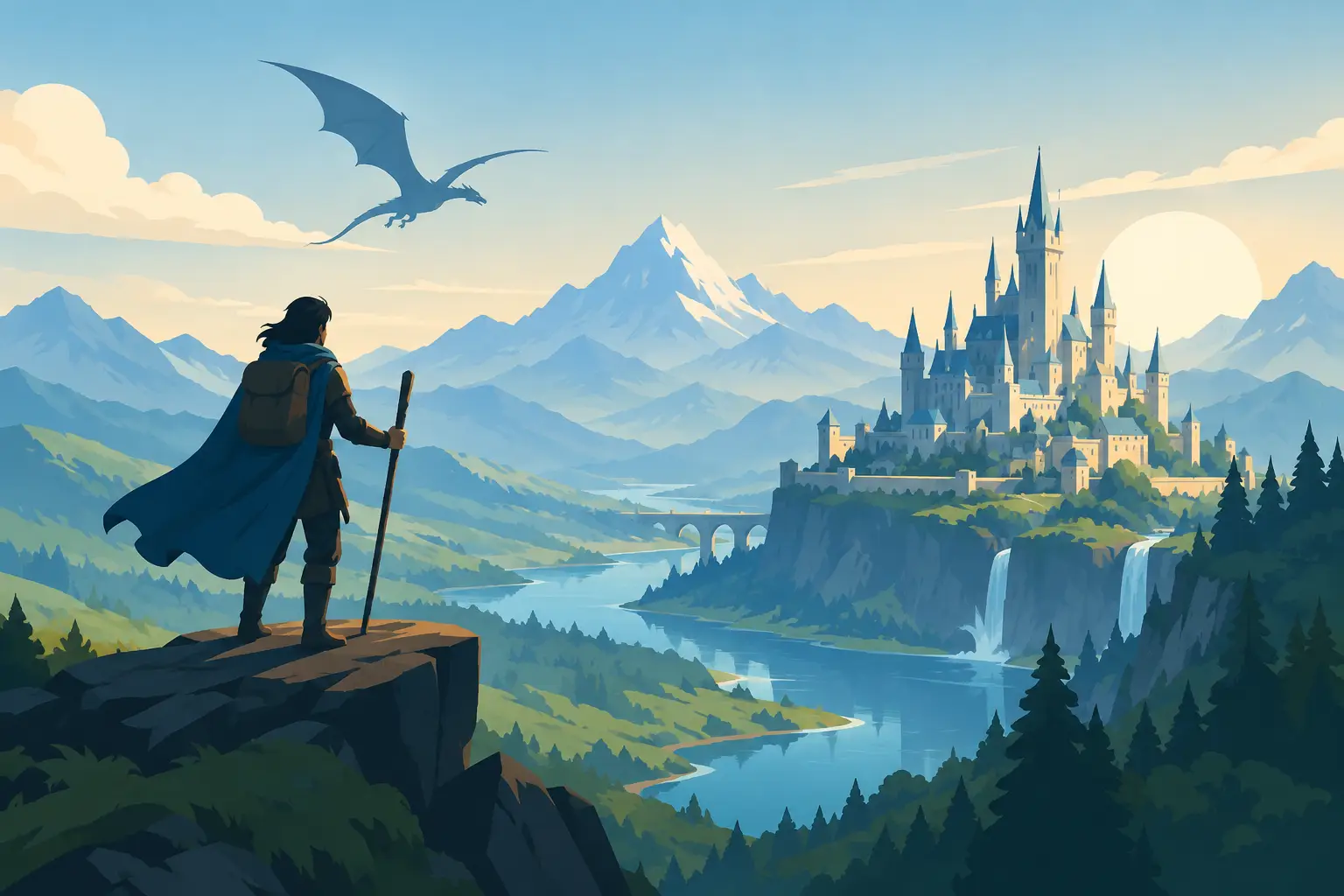
A ruined watchtower on a rain-black ridge. A market where merchants trade in moonstone and whispered maps. A forest path that seems harmless until it leads travelers somewhere they never meant to go. The best fantasy settings do not simply give heroes somewhere to stand. They give every choice a shadow, every victory a cost, and every quest a reason to matter.
For readers who love epic adventures, a memorable world is part of the promise. It is where danger gathers, courage is tested, friendships are forged, and ordinary people discover what they are willing to risk for those who cannot protect themselves. Magic may draw us through the gate, but emotional truth is what makes us stay.
Fantasy Settings Must Do More Than Look Beautiful
A fantasy realm can have crystal cities, ancient dragons, floating islands, and kingdoms carved into mountains. Those images can be breathtaking. Yet spectacle alone rarely carries a story very far. If a magical world has no pressure, no history, and no consequences, it can feel like painted scenery behind the action.
The settings readers remember feel alive because they push back. A desert empire may make water more valuable than gold. A kingdom ruled by sorcerers may force people to hide their gifts. A coastal city might flourish on trade while quietly feeding its weakest citizens to a cruel system. In each case, the place shapes the people who live there.
That is where adventure gains weight. A hero is not only battling an enemy. They are moving through a world with its own fears, divisions, legends, and unfinished wounds. The road itself can challenge them. The laws of the realm can challenge them. Even a safe home can become difficult to defend when darkness reaches its doorstep.
The Rules of Magic Create Real Stakes
Magic is often the first thing readers want from fantasy, but unlimited power drains tension fast. If a character can solve any problem with a spell, a story loses the thrilling uncertainty that makes a quest worth following.
Compelling magic has boundaries. Perhaps it demands sacrifice. Perhaps it is inherited, feared, unstable, or tied to promises that cannot be broken. Maybe every use of power leaves a mark on the person who wields it. The exact rule matters less than the result: characters must make hard decisions.
A healer who can save one life but not two faces a terrible choice. A warrior given a weapon of immense power may have to decide whether using it will turn them into the very thing they fight. A young traveler who discovers a hidden gift might gain hope and danger at the same moment.
Those limits do not make magic less wondrous. They make it more meaningful. Wonder becomes stronger when it is paired with risk, and courage becomes brighter when there is no easy way forward.
History Should Leave Scars
Every great setting feels as though something happened there before the first chapter began. Old wars leave broken fortresses and bitter bloodlines. Fallen rulers become songs, warnings, or lies told by people who want power. Ancient gates are never just ancient gates. Someone built them for a reason, and someone may still be waiting on the other side.
This history does not need to arrive in a long lecture. It can appear in the way villagers fall silent when a certain banner passes by. It can be found in a child’s bedtime tale, a forbidden inscription, or a sword preserved by a family that no longer remembers why it matters.
A setting becomes richer when the past is not safely buried. It should reach into the present, shaping the choices heroes must make now. That is how a simple journey becomes part of something legendary.
Let the Landscape Test the Hero
A powerful fantasy setting is not passive. Mountains delay an army. Frozen rivers cut off escape. Dense woods conceal allies and enemies alike. A city of narrow bridges can become a trap when panic spreads. Geography is not decoration when it changes what characters can do.
This is especially important in quest-driven adventures. The path from one place to another should reveal character. A dangerous crossing may show who takes responsibility when fear takes hold. A strange village may force travelers to choose between protecting their mission and helping people in immediate need. A ruined temple can reveal a truth no one wanted to face.
Not every location needs a monster or a battle. Quiet places carry power, too. A small room lit by a hearth can remind a hero what they are fighting for. A field where nothing grows may show the cost of an old curse more clearly than a page of explanation. Contrast matters. After a brutal escape, a moment of shelter feels earned.
Give Each Place an Emotional Temperature
Readers do not only remember what a kingdom looked like. They remember how it made them feel. Some places should inspire awe. Others should create unease long before danger appears. A sanctuary can feel warm, guarded, and hopeful. A tyrant’s capital can feel glittering, crowded, and watchful.
That emotional atmosphere comes from details working together: the sounds in the streets, the rituals people follow, the food they share, the stories they avoid telling. It also comes from who has power and who does not. A grand palace may feel magnificent to a visiting noble and terrifying to a servant who knows what happens behind its locked doors.
This is why protecting the innocent carries such force in fantasy adventure. When readers understand what life is like for ordinary people in a threatened town or fractured kingdom, the hero’s fight becomes personal. The stakes are no longer an abstract prophecy. They are homes, families, futures, and the fragile hope that goodness can survive.
A World Needs Room to Grow
A single-book setting can be tightly focused. A series needs horizons. Readers should sense that there are distant lands, hidden histories, rival powers, and unanswered mysteries beyond the current quest. That does not mean every corner must be explained at once. In fact, leaving some doors closed can make a world feel larger.
The key is progression. Each new adventure should reveal a different face of the realm. The first journey may introduce its magic and moral conflict. The next can expose deeper threats, old alliances, or a region that sees the central struggle in a completely different way. As the world expands, the protagonist’s understanding must expand with it.
That is part of the pleasure of following a recurring hero. Readers see familiar places changed by war, sacrifice, and hard-won hope. They recognize the cost of returning to a place that once felt safe. They also get the satisfaction of realizing that a small clue from an earlier adventure mattered far more than anyone knew.
In the Asim’s Extraordinary Journeys series, that sense of continuing discovery helps turn each new challenge into more than another obstacle. The journey grows because the world grows, and because the hero grows within it.
Make Wonder Serve the Heart
The most lasting fantasy settings are filled with marvels, but their greatest purpose is not to impress. They reveal who people are when the impossible becomes real. A cursed kingdom tests mercy. A hidden realm tests trust. A dangerous relic tests whether power can be carried without losing compassion.
Readers may come for soaring towers, enchanted forests, and epic battles. They return for the moment a frightened character chooses bravery, when loyalty holds under pressure, or when someone with every reason to walk away stays to defend another person.
When building or choosing your next fantasy adventure, look past the map. Ask what this world asks of its heroes, what it threatens, and what kind of hope it makes possible. The right setting will not merely contain the journey. It will make that journey impossible to forget.