
Blogs
What Is the Difference Between Fantasy and Epic Fantasy?

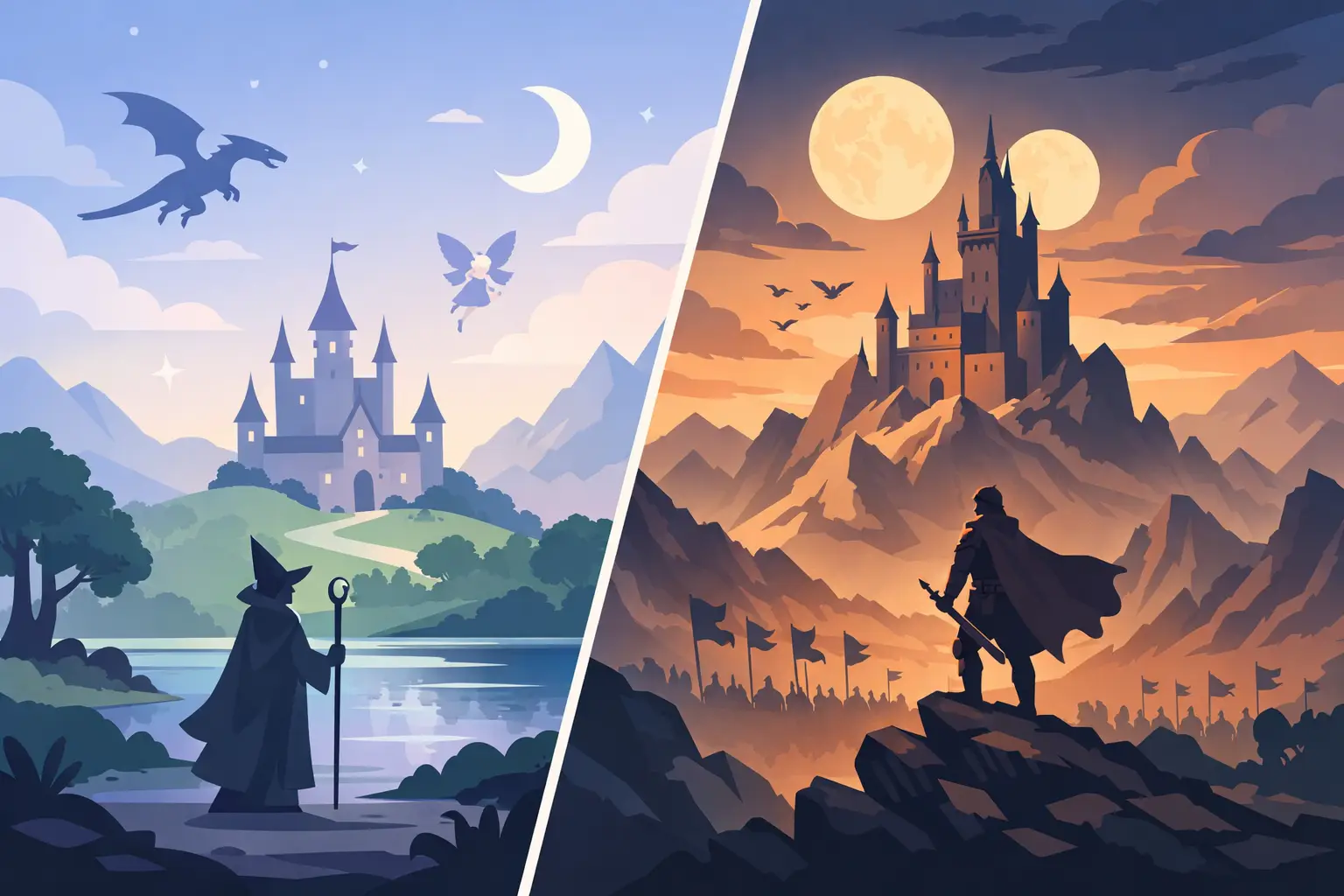
Some stories feel like a whispered spell in a hidden corner of the world. Others arrive like thunder – kingdoms trembling, ancient evil rising, and one brave soul stepping forward because no one else can. If you’ve ever wondered what is the difference between fantasy and epic fantasy, the answer comes down to scale, stakes, and the kind of journey the story promises.
Fantasy is the wide-open kingdom. Epic fantasy is one of its grandest roads.
What is the difference between fantasy and epic fantasy?
Fantasy is the larger genre. It includes any story shaped by magic, invented worlds, mythical creatures, supernatural forces, or impossible events. That range is enormous. A fantasy novel might follow a single girl learning she can speak to animals. It might center on a haunted forest, a cursed sword, or a thief trying to survive in a city where sorcery is outlawed.
Epic fantasy is a specific branch within fantasy. It usually tells a larger story with world-shaping consequences. The scope is broader, the conflict is heavier, and the journey often stretches beyond one personal struggle. In epic fantasy, the hero’s choices can decide the fate of kingdoms, nations, or entire realms.
That’s the cleanest answer, but the real distinction gets more interesting when you look at how each type of story feels on the page.
Fantasy can be intimate. Epic fantasy aims for grandeur.
A standard fantasy story can be quiet, strange, playful, dark, romantic, or deeply personal. It doesn’t need a war between light and shadow to be fantasy. It only needs to build its conflict around elements outside ordinary reality.
That flexibility is part of what makes the genre so beloved. Fantasy can tell small stories with huge emotional weight. A missing child in an enchanted village can matter just as much to a reader as the fall of an empire, because the heart of the story is still human.
Epic fantasy, though, usually reaches for something bigger and more cinematic. It often includes ancient prophecies, contested thrones, sprawling maps, legendary weapons, old powers waking up, and quests that test courage to the breaking point. The mood tends to carry more weight. Even when the story begins with one person in one village, it rarely stays there for long.
This is why readers often describe epic fantasy as immersive in a different way. It does not simply invite you into a magical setting. It asks you to believe that an entire world is moving, colliding, and changing around the characters.
The scope is one of the biggest differences
If fantasy is the umbrella, scope is one of the clearest ways to tell where a book falls underneath it.
Fantasy can stay tightly focused. The conflict may affect one family, one town, or one character’s inner life. The world might be rich and magical, but the plot does not need to expand into a continent-spanning struggle.
Epic fantasy usually widens the frame. There may be multiple lands, cultures, factions, histories, and power struggles. The conflict tends to ripple outward. What starts as a personal burden often becomes a battle tied to the survival of many.
That does not mean every epic fantasy needs ten kingdoms and a cast of hundreds. Some are leaner than that. But even in a more streamlined epic fantasy, the emotional promise is larger. Readers expect a journey that matters beyond the hero alone.
Stakes matter, but not in the same way
All good fantasy has stakes. A story without meaningful risk rarely leaves a mark.
The difference is the level of consequence. In many fantasy stories, the stakes are personal first. Will the hero save a sibling, break a curse, survive exile, or reclaim a stolen identity? Those are powerful stakes, and they can create unforgettable stories.
In epic fantasy, the stakes are usually personal and collective at the same time. The hero may still be fighting for someone they love, but that struggle is tied to a larger crisis. If they fail, a kingdom may fall. If they surrender, darkness may spread. If they choose wrongly, the innocent may pay the price.
That larger moral pressure is part of the appeal. Epic fantasy often carries a sense of destiny, sacrifice, and responsibility. It is not just about what the hero wants. It is about what the world needs from them, whether they feel ready or not.
Worldbuilding in fantasy versus epic fantasy
Fantasy and epic fantasy both rely on worldbuilding, but they use it differently.
A fantasy novel can sketch a magical world with a light touch. It may reveal only what the story needs – a few customs, a bit of lore, one dangerous rule of magic, one secret place where wonder lives. That can be enough. Sometimes mystery is part of the charm.
Epic fantasy usually builds with more weight behind every stone. Readers often expect deeper history, political tension, old legends, layered cultures, and a sense that this world existed long before page one. The world is not just a backdrop. It feels like a living force pressing against every decision.
Still, more worldbuilding is not always better. That is one of the trade-offs. A fantasy story with a lighter touch can move faster and feel more intimate. An epic fantasy with rich history can create awe, but if it loses sight of character, the spectacle starts to feel hollow.
The best epic fantasy remembers that the map matters because the people on it matter.
Heroes often carry a different kind of burden
Another way to understand what is the difference between fantasy and epic fantasy is to look at the role of the protagonist.
In fantasy, the hero may be unusual, gifted, reluctant, reckless, or ordinary. Their journey might be about discovery, survival, belonging, or transformation. They do not have to be chosen by fate. They only need a compelling reason to act.
In epic fantasy, heroes often carry a burden that feels larger than themselves. They may be drawn into prophecy, war, ancient rivalries, or a mission no one else can complete. Even when they begin as unknown or untested, their path tends to lead toward leadership, sacrifice, and legacy.
This is where epic fantasy often feels especially stirring. Readers who love courageous protagonists, loyal companions, and quests that demand everything are usually drawn to that scale of character arc. The hero is not just growing. The hero is being forged.
That is also why series work so well in epic fantasy. A long journey gives the character room to fail, rise, protect others, and become someone worthy of the world they are trying to save.
Not every big fantasy book is epic fantasy
This is where things get fuzzy, and honestly, that is part of the fun.
A book can be large in page count and still not feel epic. It can have magic, battles, and even a royal court, but if the core conflict stays personal and contained, many readers would still simply call it fantasy.
On the other hand, a story does not need endless lore to qualify as epic fantasy. If it has a sweeping quest, world-level stakes, and a heroic struggle against overwhelming darkness, it may earn that label even if the prose is fast-moving and accessible.
Genres are useful, but they are not iron gates. Many books blend fantasy, epic fantasy, sword and sorcery, coming-of-age adventure, or fairy-tale elements. Some start small and grow epic over time. Others wear epic clothing but tell a more intimate tale underneath.
So the best question is not just what shelf it belongs on. It is what kind of experience the story delivers.
Which one should you read?
That depends on what you are hungry for.
If you want wonder, magic, mystery, and a story that stays close to one character’s heart, fantasy may be exactly what you need. If you want sweeping danger, heroic sacrifice, loyal bonds, and the thrill of a journey that could change everything, epic fantasy is often the better fit.
Many readers love both, just in different moods. Sometimes you want the quiet enchantment of a single impossible problem. Sometimes you want the firelit call of a legendary quest. Neither is better. They simply aim at different emotional horizons.
For readers who crave adventure with courage at its center, epic fantasy often leaves the strongest echo. It offers more than escape. It gives you the feeling that even in a world full of darkness, loyalty still matters, bravery still costs something, and one determined heart can help hold the line.
And maybe that is why the distinction matters at all. Fantasy opens the door to endless worlds. Epic fantasy asks you to walk farther, risk more, and believe that the journey might change you too.