
Blogs
Quest Fantasy vs Portal Fantasy Explained

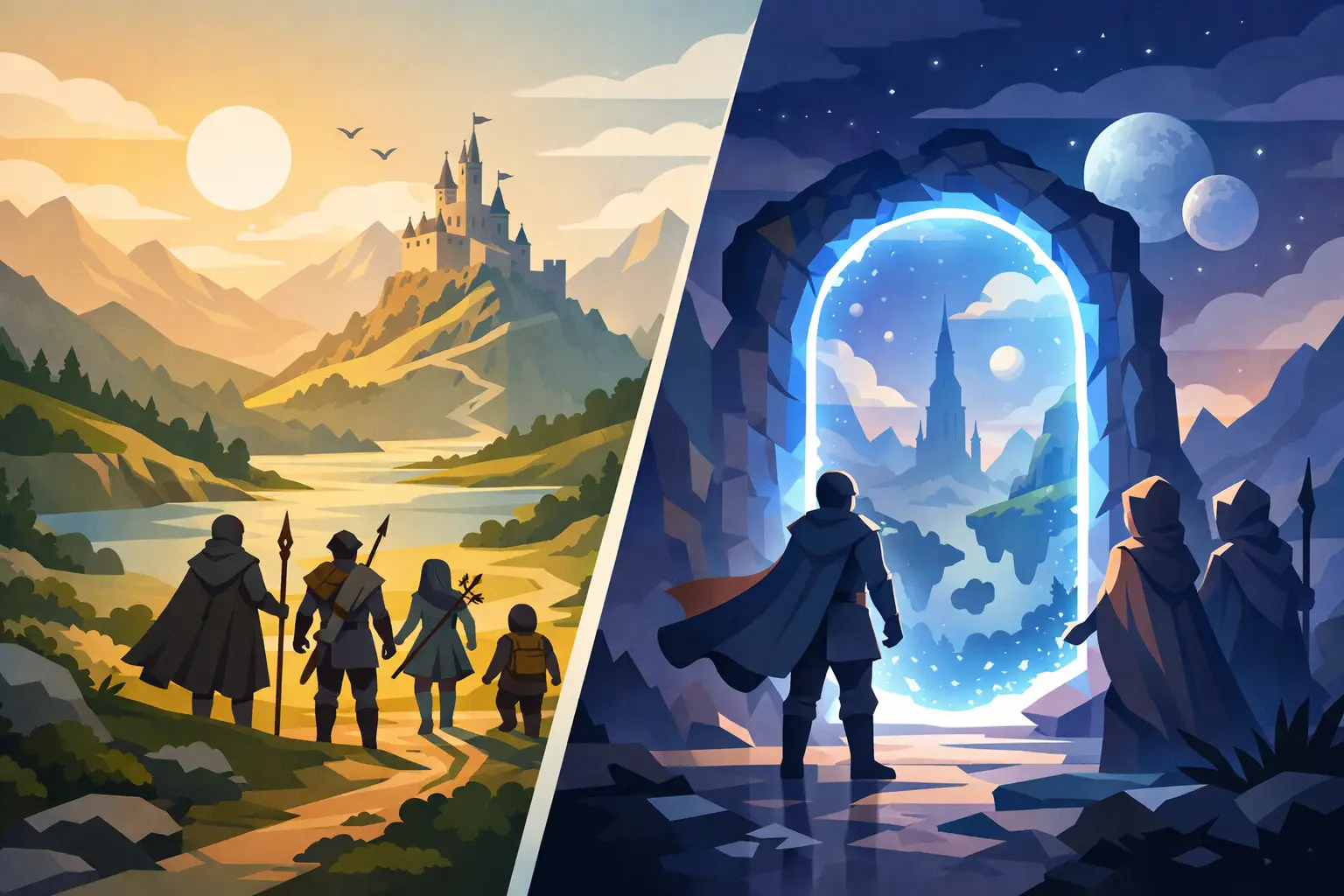
Some fantasy stories hand a hero a mission and dare them to cross mountains, kingdoms, and impossible odds. Others tear open reality itself and ask a simpler, more unnerving question: what happens when someone from our world steps into another one? That tension sits at the heart of quest fantasy vs portal fantasy, and knowing the difference can change the way you choose your next unforgettable read.
For readers who crave epic adventures, the distinction matters because these subgenres promise different kinds of wonder. One is powered by pursuit. The other is powered by passage. Both can deliver danger, magic, loyalty, sacrifice, and that pulse-quickening sense that the world is larger than anyone imagined. But they move the heart in different ways.
Quest fantasy vs portal fantasy: the core difference
At its simplest, quest fantasy is built around a goal. A character or group must reach a place, recover an object, defeat a threat, rescue someone, or fulfill a calling. The story gains momentum from movement toward that objective. The road is rarely safe, and that is the point. Every step tests courage, friendship, and resolve.
Portal fantasy begins with crossing over. A doorway, wardrobe, rabbit hole, magical book, hidden gate, dream path, or unexplained rupture carries a character from an ordinary world into a fantastical one. The first source of tension is not just what must be done, but where the character is and how they will survive in a reality that does not follow familiar rules.
That means quest fantasy usually asks, Will the hero complete the mission? Portal fantasy more often asks, What kind of person will this world demand the hero become?
Of course, the line is not always sharp. Many portal fantasies become quest fantasies once the traveler arrives. A character may enter another realm and then learn they must recover a relic, stop a tyrant, or save a kingdom. That overlap is why readers sometimes lump them together. Still, their emotional starting points are different, and that starting point shapes the whole experience.
Why quest fantasy feels so propulsive
Quest fantasy thrives on direction. Even when the path twists through haunted forests, ruined cities, and battle-scarred strongholds, the reader feels the pull of a destination. That creates a special kind of momentum. You are not simply watching events happen. You are marching beside the characters toward something that matters.
This structure is especially powerful for readers who love heroic narratives. The mission becomes a proving ground. Loyalty is tested when the road gets cruel. Bravery means more when turning back would be easier. Sacrifice lands harder because there is always a visible prize or peril ahead.
Quest fantasy also tends to showcase the world through motion. Instead of learning about one kingdom in isolation, the reader sees borders, cultures, threats, and legends unfold across the journey. The world feels vast because the characters must cross it. That gives these stories a cinematic sweep – one legendary journey stretched across endless worlds, each step raising the stakes.
The trade-off is that quest fantasy can feel familiar if the mission is too predictable. If the destination matters more than the people making the journey, the story can start to read like a map instead of an adventure. The best quest fantasies never let that happen. They make the road personal.
What portal fantasy does that no other subgenre can
Portal fantasy carries a different spark. Its first magic trick is contrast. A character begins in the known world, with its routines, limits, and assumptions, then crosses into a place where none of those certainties hold. That transition creates instant wonder. It can also create fear, grief, temptation, or awe.
Because portal fantasy starts with dislocation, it often gives readers a strong point of identification. The protagonist may not understand the rules any better than we do. They ask the questions we would ask. They stumble where we would stumble. That makes discovery feel intimate.
It also gives the story a built-in emotional charge. Crossing into another world is rarely just a change of scenery. It can symbolize growing up, escaping pain, confronting hidden truth, or awakening to purpose. A portal is not only a passage between places. It is often a passage between versions of the self.
The risk, though, is that portal fantasy can spend too long admiring the doorway. Wonder matters, but wonder alone cannot carry the whole tale. Once the reader understands the novelty of crossing over, the story still needs real stakes, memorable conflicts, and characters who feel alive beyond the premise.
Heroic identity is where the split gets interesting
One of the biggest differences in quest fantasy vs portal fantasy is how the hero relates to the world.
In quest fantasy, the protagonist usually belongs to the fantasy setting from the start. They may be a farm boy, a thief, a prince, a scout, or an outcast, but they are part of that world’s fabric. Even if they begin small, they are tied to its history, dangers, and destinies. Their journey often feels like an awakening into responsibilities that were already waiting for them.
In portal fantasy, the protagonist often begins as an outsider. They must learn the customs, dangers, and meaning of the new world while carrying the memory of another one. That outsider status changes the tone. Their transformation is not only about courage. It is about belonging. Can they earn a place here? Should they return home? What does home even mean after seeing something greater and stranger than ordinary life could offer?
That question of belonging can make portal fantasy especially moving for readers who have ever felt caught between identities, places, or expectations. Quest fantasy, by contrast, often speaks with fierce clarity to readers who long for purpose – a call worth answering, a road worth risking everything to follow.
Worldbuilding works differently in each one
Both subgenres can deliver breathtaking worlds, but they reveal those worlds in different ways.
Quest fantasy often unfolds its world horizontally. The characters travel, and with each new region the reader sees another layer of politics, magic, danger, and myth. The scale grows as the road extends. This creates a natural sense of escalation, which is one reason quest stories work so well in series fiction.
Portal fantasy often unfolds its world vertically. The reader does not just see a new place. They see a new reality compared against an old one. The contrast between the two worlds becomes part of the worldbuilding itself. A forest is not only enchanted. It is more enchanted because the protagonist remembers ordinary trees. A kingdom is not only perilous. It is more startling because it exists beside a life that once seemed normal.
Neither approach is better. It depends on what kind of wonder a reader wants. If you love the feeling of crossing a continent with danger on every horizon, quest fantasy may hit harder. If you love the shock of stepping through the veil and seeing existence itself widened, portal fantasy has a rare power.
Which one delivers stronger stakes?
That depends on the story, but the stakes usually feel different in texture.
Quest fantasy often builds external stakes with sharp clarity. Finish the mission or the kingdom falls. Reach the mountain or darkness spreads. Guard the innocent or evil wins ground. The objective gives the story backbone, and that backbone can support huge emotional payoffs.
Portal fantasy often begins with personal stakes before it expands outward. The hero is lost, overwhelmed, tempted, or transformed. They may need to survive, understand the world, or decide whether to embrace their role in it. Only then do the larger stakes fully emerge. When done well, that progression can be deeply powerful because the saving of the world grows out of the saving of the self.
For readers who want immediate urgency, quest fantasy often strikes faster. For readers who want emotional immersion through discovery and identity, portal fantasy can cut deeper.
Why so many unforgettable stories blend both
The truth is, some of the most memorable fantasy adventures refuse to choose. They use the portal to ignite wonder, then use the quest to sustain momentum. That combination can be irresistible. First comes the astonishment of entering another realm. Then comes the mission that gives the journey shape.
This hybrid approach works because it satisfies two desires at once. Readers get the thrill of stepping beyond the familiar and the fierce satisfaction of watching heroes fight toward a purpose. When emotional sincerity meets escalating adventure, the result can feel enormous.
That is also why fantasy series built around recurring heroic journeys resonate so strongly. Readers return not only for magical worlds, but for the chance to travel with a character whose courage has already proven true. A story world can be wondrous on its own. Add a hero willing to face its darkest roads for the sake of others, and that wonder becomes unforgettable.
So which should you read next?
If you want a story driven by destiny, peril, companionship, and the long road toward a high-stakes objective, choose quest fantasy. If you want the shock of crossing into another reality and discovering who you are inside that upheaval, choose portal fantasy.
And if you can find a story that gives you both, hold onto it.
The best fantasy does more than entertain. It reminds us that courage can grow under pressure, that loyalty matters when the night gets dark, and that every impossible world is really asking one human question: when the call comes, will you step forward?