
Blogs
Fantasy Adaptation Trends Worth Watching

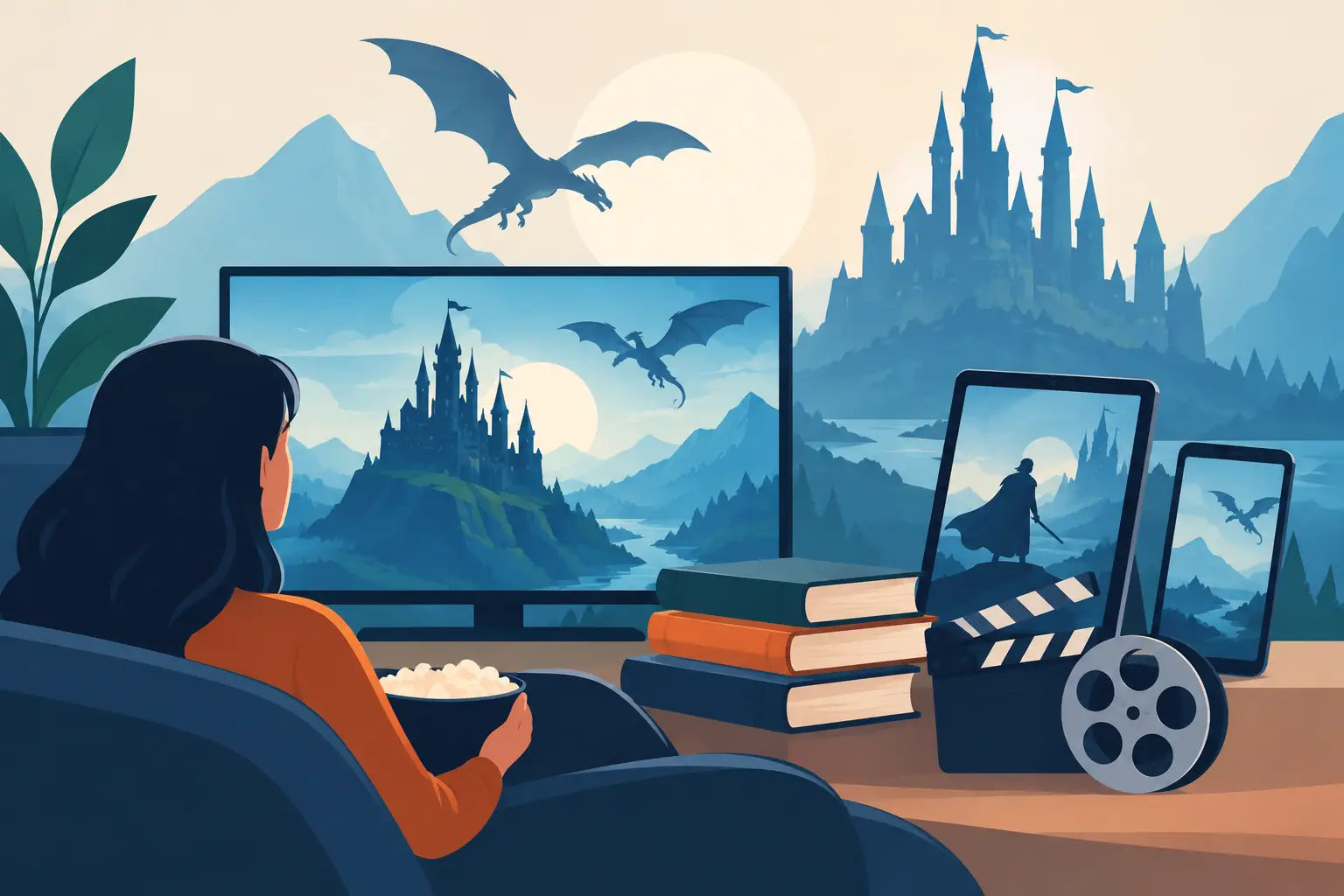
A dragon can look magnificent in a trailer and still feel hollow if no one on screen has a reason to fear it, love it, or stand against it. That is the real question behind fantasy adaptation trends: not whether a book can be turned into a spectacle, but whether its courage, wonder, and emotional truth can survive the journey.
Fantasy has never belonged to one shelf, one screen, or one kind of hero. Its worlds expand because readers carry them with them. When an adaptation gets that bond right, a castle becomes more than a backdrop, a magical artifact becomes more than a prop, and a quest feels like a promise worth following.
Fantasy Adaptation Trends Are Raising the Stakes
The most visible trend is simple: audiences want fantasy that treats its source material seriously. They are no longer satisfied with a familiar chosen-one outline covered in digital effects. They want a world with history in its stones, consequences in its magic, and characters whose choices cost them something.
This does not mean every adaptation must reproduce every chapter. Books and screens do different work. A novel can spend pages inside a hero’s doubts, reveal ancient history through a single sentence, or let a side character quietly become a reader favorite over several hundred pages. Film and television have to make many of those elements visible and immediate.
The challenge is not copying every event. It is protecting the story’s soul.
A faithful adaptation understands what cannot be lost. Maybe it is the central friendship that gives the quest meaning. Maybe it is the moral line the hero refuses to cross. Maybe it is the strange, beautiful logic of a magical world. Details may shift, scenes may be combined, and timelines may tighten, but the emotional promise must remain recognizable.
Readers Want Respect, Not Replication
There is a meaningful difference between faithfulness and imitation. A page-perfect adaptation can still miss the point if it rushes past the moments that made readers care. At the same time, a bolder reinterpretation can work when it honors the characters, themes, and stakes that gave the original its power.
The best adaptations make audiences feel that the creators understand why the story mattered before they began changing anything. They do not treat fantasy as a costume box full of swords, crowns, and glowing spells. They treat it as a living world shaped by sacrifice, loyalty, grief, and hope.
That is why some changes spark excitement while others cause disappointment. Readers can accept a new scene when it reveals a character more clearly. They are less likely to accept a change that turns a brave protector into a cynical bystander simply to make the story feel darker.
The Return of the Long Journey
Fantasy adaptation trends also point toward something readers have always loved: the long journey. Not every story needs multiple seasons or a sprawling franchise, but fantasy often gains strength from room to breathe.
A quest is more than the final battle. It is the dangerous road before it, the companion who proves loyal when fear takes over, the village worth defending, and the moment a young hero realizes that power alone will not save anyone. Those layers are hard to fit into a single rushed adventure.
Television offers space for side characters, rival kingdoms, old betrayals, and the slow gathering of danger. A film can create a more concentrated, cinematic burst of wonder. Neither format is automatically better. It depends on the shape of the story.
A tightly focused tale about one impossible mission may shine on the big screen. An epic with multiple heroes, ancient secrets, and a changing world may need the patient rhythm of a series. What matters is that the format serves the journey instead of forcing the journey to serve a business plan.
Franchise Potential Cannot Replace a Real Ending
The desire for an ongoing fantasy universe is understandable. Readers love returning to familiar realms, and a continuing saga can deepen the impact of every earlier choice. But audiences can sense when a story has been stretched only to leave doors open.
Each installment needs its own emotional victory, loss, or revelation. The larger mystery can continue, but the audience should never feel as if they have watched several hours of setup without receiving a meaningful chapter of the adventure.
For fantasy authors, this is a useful reminder. Series loyalty grows when every book delivers a complete experience while also making the next horizon impossible to ignore. That balance is part of what makes a four-book journey feel like one legendary path rather than four disconnected stops.
Spectacle Is Finally Being Asked to Carry Meaning
Fantasy screen worlds have become more visually ambitious. Creatures can move with astonishing weight. Enchanted cities can glow with impossible color. Battles can make viewers feel the scale of a kingdom at war.
Yet the strongest trend is not bigger effects. It is effects with purpose.
A magical storm matters because someone must cross it to save another life. A monster matters because it exposes a hero’s fear. A battlefield matters because people with names, memories, and promises may not return from it. Spectacle becomes unforgettable when it reveals the heart of the conflict.
This is especially important for stories built around protecting the innocent and confronting injustice. A hero who swings a sword well may hold attention for a scene. A hero who risks everything because they cannot abandon the vulnerable can hold a reader or viewer for an entire saga.
Fantasy has always had room for wonder, but wonder becomes deeper when it is attached to a human choice. The spell is not the point. The person who chooses how to use it is.
New Heroes, Wider Worlds
Another encouraging shift is the growing appetite for fantasy heroes with different backgrounds, ages, abilities, and roles. The genre is becoming broader without losing its oldest strengths: adventure, danger, transformation, and the belief that a single act of courage can change more than one life.
This should not be confused with placing a new face into an old role and calling the work finished. Meaningful representation begins with character. Every hero deserves desires, flaws, humor, fears, and a purpose beyond symbolizing an idea.
Fantasy is uniquely suited to this work because it asks readers to imagine beyond the limits of the known world. If a realm can contain sky ships, hidden kingdoms, ancient magic, and creatures of legend, it can also contain many kinds of people at the center of the story.
The result is not a smaller genre divided into niches. It is a richer field of adventures, where more readers can recognize themselves in the person who takes up the map, faces the darkness, and refuses to leave others behind.
What These Trends Mean for Fantasy Readers and Writers
For readers, the current moment offers a reason to be hopeful and discerning. More adaptations mean more opportunities to revisit beloved worlds, but not every version will match the one you built in your imagination. That is part of the trade-off. A screen adaptation can give a voice, face, and music to a scene you love, while a book will always preserve the private magic of experiencing it first through your own mind.
For writers, the lesson is not to write every novel as a future streaming pitch. The stories that endure on screen usually begin as stories that endure on the page. Build the world deeply enough that it has shadows beyond the map. Give the hero a goal worth pursuing and a wound that makes the pursuit difficult. Let magic create problems as often as it solves them.
Most of all, give the adventure an emotional center. In a series such as Asim’s Extraordinary Journeys, the continuing pull of the quest comes from more than new dangers around the next corner. It comes from following a hero whose choices matter, whose loyalty is tested, and whose world is worth fighting for.
The next great fantasy adaptation may arrive with towering castles, ancient beasts, and a battle large enough to shake a kingdom. But the story people share with friends will likely be quieter: the moment someone chose courage over comfort, mercy over power, and hope when the road ahead looked impossible.