
Blogs
Fantasy Novels With Moral Conflict That Matter

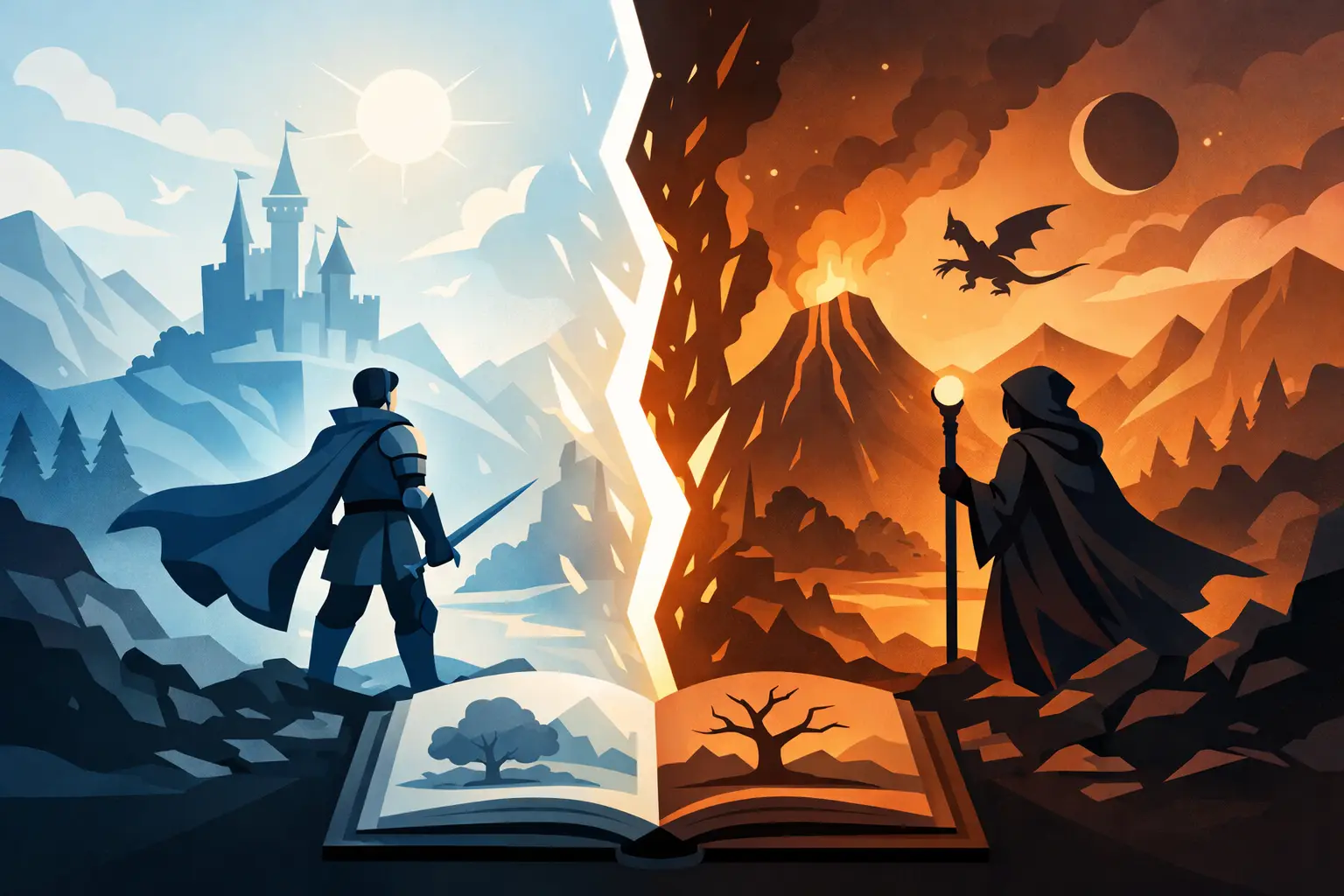
A dragon can be defeated. A cursed fortress can be escaped. But what happens when saving a kingdom means betraying the person who once saved your life? That is where fantasy novels with moral conflict become unforgettable. The danger is no longer only beyond the hero’s sword. It is in the choice they must live with after the battle ends.
Readers come to fantasy for impossible realms, ancient magic, and daring quests. They stay when the adventure asks something real of its heroes: Will they use power they know could corrupt them? Will they protect the innocent when doing so costs them victory? Will they remain loyal when loyalty and justice no longer point in the same direction?
Why Fantasy Novels With Moral Conflict Hit Harder
A great quest gives a hero a destination. Moral conflict gives that journey a soul.
When the right path is obvious, a character’s courage can feel simple. When every path carries a wound, courage becomes more meaningful. A young warrior may have the strength to face an army, yet still fear the moment they must choose between their sworn duty and a frightened child. A ruler may win the throne, only to learn that keeping peace requires a mercy their allies call weakness.
Those choices bring fantasy’s grandest elements down to a human scale. A magical artifact is not just a glowing relic if it can end a war at the price of the wielder’s compassion. A rebellion is not merely a clash of banners if the rebels must decide whether freedom justifies hurting people who had little say in the tyranny around them.
The best stories do not always give readers a clean answer. They make us feel the weight of the answer the character chooses.
The Difference Between Darkness and Moral Weight
Moral conflict does not require a bleak story. A world can be full of danger without becoming hopeless, and a hero can suffer without losing the light that makes readers want to follow them.
Darkness for its own sake may shock, but it does not automatically create depth. Real moral weight comes from consequences, competing values, and choices that reveal who a character truly is. If a hero breaks a promise, the story should understand why that promise mattered. If they spare an enemy, mercy should cost something. If they choose violence, the victory should not erase the lives changed by it.
This is especially powerful in adventure fantasy because the external stakes are already enormous. The fate of a city, a magical world, or an entire people may hang in the balance. Yet the emotional stakes can be even greater: whether a brave character becomes the kind of person they once admired.
Hope belongs in these stories. It is not the absence of pain. It is the decision to keep choosing what is right, even when right is difficult to see.
Courage Is More Than Fearlessness
Fantasy heroes are often bold, gifted, or chosen for a purpose. Those qualities make for thrilling scenes, but they are only the beginning. The more compelling question is what happens when a hero’s gifts offer an easy but dishonorable solution.
Perhaps a spell can force obedience. Perhaps a legendary blade can kill an enemy who is no longer a threat. Perhaps an ancient prophecy gives the hero permission to treat everyone else as pieces on a board. A character with moral strength pauses before taking that path, even while the clock is running out.
That pause is not weakness. It is the moment a hero becomes worthy of the journey.
Loyalty Must Be Tested to Mean Something
Loyalty is one of fantasy’s most powerful promises. Companions cross haunted lands together. Friends stand shoulder to shoulder against impossible odds. Families risk everything to keep one another safe.
But loyalty becomes richer when it is challenged. A friend can be wrong. A beloved mentor can hide a terrible secret. A kingdom can demand allegiance while abandoning its most vulnerable citizens. In these moments, a character may need to oppose someone they love without ceasing to love them.
That tension creates emotion no battlefield alone can match. Readers do not want betrayal treated as a cheap surprise. They want to understand the history, devotion, fear, and heartbreak behind it. They want to believe reconciliation is possible, while knowing it may not be.
Power Is the Sharpest Test
Magic makes moral conflict visible. It turns temptation into something a character can hold in their hands.
A powerful gift may promise protection, revenge, knowledge, or control. The trade-off is often subtle at first. One small compromise can seem reasonable when lives are at stake. Then another compromise follows. Before long, the hero must face a terrifying question: did they use the power, or did the power begin using them?
This is why magical systems matter beyond spectacle. Limits, costs, and consequences make power dramatic. If magic solves every problem without changing the person who uses it, tension fades. But if every use demands sacrifice, restraint, or accountability, even a single spell can carry the force of a major battle.
There is no one rule for how much darkness a fantasy story should contain. Younger readers may prefer clear hope and consequences that do not linger too brutally. Adult readers may welcome thornier politics and harsher outcomes. What matters in either case is emotional honesty. The story should never pretend a painful choice is painless.
Villains Need Reasons, Not Excuses
The strongest fantasy villains often believe they are protecting something: order, tradition, their people, their family, or a vision of peace. Understanding that belief does not excuse cruelty. It makes the conflict more dangerous because it forces the hero to recognize how noble intentions can become monstrous when separated from compassion.
A villain who is evil simply because the plot needs an enemy can still create action. A villain who reflects the hero’s possible future creates a deeper kind of suspense. If the hero accepts one ruthless shortcut, could they become what they are fighting?
That question also protects stories from easy moral speeches. Justice may require resistance. Mercy may require boundaries. Forgiveness may be offered, but it cannot always restore what was destroyed. Fantasy is at its most honest when it allows these truths to stand together.
A Quest Should Change More Than the Map
The most satisfying fantasy adventures leave their heroes transformed. They return from the hidden kingdom, the shattered battlefield, or the edge of an endless world carrying more than scars and trophies. They carry a new understanding of responsibility.
In Asim’s Extraordinary Journeys, the promise of epic adventure carries its greatest force when courage is tied to protecting others and remaining true under pressure. A legendary journey is not defined only by the monsters faced. It is defined by the heart that refuses to abandon the innocent when the easier road calls.
For readers, that is the lasting gift of a morally charged fantasy saga. The castles, creatures, and enchanted realms ignite the imagination, but the choices stay behind after the final page. We remember the hero who had every reason to surrender to anger and chose mercy instead. We remember the companion who told the truth when silence would have been safer. We remember the ruler who learned that strength without justice is only another form of fear.
What Readers Can Look For
When choosing your next fantasy adventure, look past the size of the map or the number of magical creatures. Ask whether the story gives its characters something meaningful to lose. Do their decisions shape the plot, or do events simply push them from one battle to the next?
The most rewarding stories usually give readers several things at once: high stakes, a vivid world, characters worth cheering for, and choices that cannot be solved with a sword alone. They make room for wonder while refusing to make bravery easy.
A fantasy novel earns its place in a reader’s heart when its heroes face the impossible and still search for the good. Let the next quest you choose carry more than danger. Let it carry a choice that lights the way through the dark.