
Blogs
Heroic Fantasy vs Grimdark Fantasy Compared

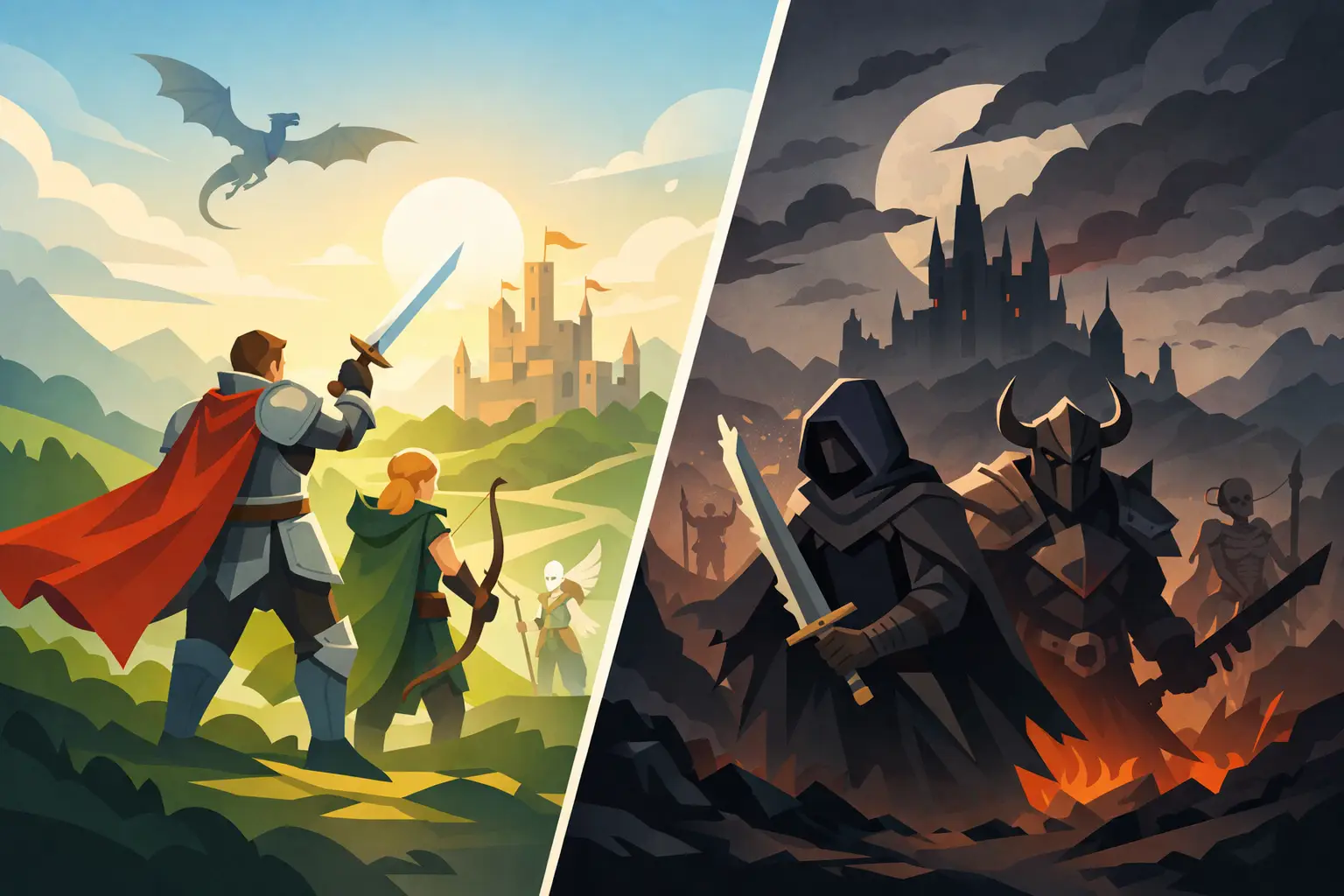
A lone traveler reaches the ruined gates of a kingdom at war. In one story, they raise a banner, gather loyal allies, and risk everything to save people who cannot save themselves. In another, the gates are already stained with betrayal, every ally has a price, and surviving the night may cost the traveler the last piece of their conscience. That is the pulse behind heroic fantasy vs grimdark fantasy: two approaches to danger, magic, and the question of what a person becomes when the world turns cruel.
Both can deliver towering castles, ancient prophecies, monstrous enemies, and battles that shake the earth. The difference is not simply that one is bright and the other is dark. It lies in what each kind of story believes courage, victory, and hope are worth.
What Makes Heroic Fantasy Feel Heroic?
Heroic fantasy places bravery at the center of the journey. Its heroes may be young, afraid, wounded, or unprepared, but they are called to stand for something larger than themselves. They defend the innocent, resist tyranny, honor their companions, and keep moving when the road ahead seems impossible.
That does not mean heroic fantasy is painless. A meaningful quest needs sacrifice. Friends can be lost, cities can fall, and a hero can face doubt so sharp it feels like a blade. Yet the story leaves room for the belief that sacrifice matters. A hard-won victory can protect a village. A promise can hold. Mercy can change the course of a kingdom.
The emotional reward is powerful because readers are not merely watching a character defeat an enemy. They are watching someone choose courage when fear would be easier. The danger is real, but so is the possibility of light.
Heroes are tested, not made cynical
A heroic protagonist does not have to be perfect. In fact, the most memorable heroes rarely are. They can make mistakes, hesitate at the wrong moment, or carry anger they do not understand. What separates them is their willingness to face those flaws rather than let them rule.
Their victories often come through loyalty and trust. A warrior needs the wisdom of a healer. A reluctant prince needs the faith of a friend. A powerful mage must learn that magic without compassion is only another form of destruction. In this kind of fantasy, fellowship is not decoration around the quest. It is often the reason the quest can be completed at all.
Evil can be frightening without being confusing
Heroic fantasy usually gives moral conflict a clear shape. The villain may have a tragic past or persuasive motives, but their actions reveal a threat that must be confronted. Readers understand what is at stake: freedom, family, a homeland, or the safety of people caught in the shadow of power.
That clarity creates momentum. When the hero steps forward, readers feel the weight of the choice and the thrill of resistance. The story can still ask difficult questions, but it does not insist that goodness is childish or powerless.
What Makes Grimdark Fantasy So Different?
Grimdark fantasy looks at a brutal world and refuses to soften its edges. Power is often corrupting, institutions are compromised, and noble intentions may lead to devastating consequences. The battlefield is not a clean place where courage guarantees victory. It is a place where the strong may exploit the weak, and the person who lives may not be the person who deserved to.
Its characters can be soldiers, assassins, criminals, disgraced rulers, mercenaries, or survivors forced into impossible choices. They may want to do good, but the world gives them terrible options. Sometimes they choose the lesser evil. Sometimes they choose themselves.
Grimdark does not mean every scene must be miserable or every character must be cruel. Humor, tenderness, and friendship can exist in these stories, often making the darkness hit even harder. The defining feature is a deep skepticism that honor alone can overcome a broken system.
Consequences linger
In grimdark, violence is rarely a quick path to glory. It leaves scars on bodies, families, and nations. A victory might remove one tyrant only to create a vacuum for someone worse. A character may save a friend while condemning strangers. Readers are invited to sit with the cost instead of being offered an easy release.
That can make grimdark intensely compelling for readers who enjoy moral tension. The question is less likely to be, “Will the hero defeat evil?” It may be, “What will be left of this person after they do what must be done?”
Morality lives in the gray
A grimdark story often withholds simple answers. A ruler who brings peace may do so through oppression. A rebel fighting for freedom may be reckless, vain, or bloodthirsty. Even a seemingly monstrous character may have a reason readers recognize, if not forgive.
The trade-off is clear. This ambiguity can feel rich and honest, especially when it reflects the messiness of history and human ambition. But if every person is selfish and every act of kindness is punished, the story can become emotionally exhausting. Darkness has more impact when it has something precious to threaten.
Heroic Fantasy vs Grimdark Fantasy: The Real Divide
The real divide between heroic fantasy vs grimdark fantasy is not the amount of blood on the page. Heroic stories can contain war, loss, and terrifying villains. Grimdark stories can contain loyalty, laughter, and even acts of sacrifice. The divide is the story’s moral horizon.
Heroic fantasy believes the horizon can be reached. The journey may demand pain, but courage and compassion can move the world toward justice. Grimdark fantasy often sees the horizon receding with every step. A character may still fight for a better outcome, but they do so knowing that justice can be compromised, delayed, or swallowed by the next disaster.
This difference shapes the reading experience. Heroic fantasy tends to leave readers energized, moved, and ready to believe that steadfastness matters. Grimdark may leave readers unsettled, thoughtful, or haunted by decisions that offer no clean answer. Neither response is lesser. They simply meet different emotional needs.
Which Kind of Fantasy Is Right for You?
Choose heroic fantasy when you want adventure with a beating heart. It is a natural fit for readers who love quests, magical worlds, found family, and protagonists who rise to protect others. If you want to close a book feeling that courage can be chosen even in the face of overwhelming odds, this is your road.
Choose grimdark when you want uncertainty, political pressure, and characters who may break as often as they triumph. It suits readers who enjoy stories where every alliance is fragile and every decision has a shadow. The reward is not always comfort. It is the fierce fascination of watching flawed people navigate a world that offers little mercy.
Your preference can also change with the season. After a difficult week, a grand heroic quest may be exactly the refuge you need. At another time, a harsher story may offer the sharper challenge you are looking for. Many fantasy readers love both because each reveals a different truth about fear, power, and the human will.
Why Hope Still Raises the Stakes
Hope is sometimes mistaken for simplicity. In a great heroic fantasy, hope is never simple. It is the choice made after the castle burns, after the mentor falls, after the hero learns how much the enemy has taken. It is not blindness to darkness. It is the refusal to let darkness have the final word.
That is why heroic stories can carry such lasting emotional force. When a protagonist protects the vulnerable despite the danger, or returns for a companion when escape would be safer, the action means more than a flashy victory. It reveals character. It tells readers that strength is not only the ability to wield power, but the willingness to use it in service of others.
The adventures in Asim’s Extraordinary Journeys are built in that spirit: high-stakes worlds, dangerous trials, and a heroic through-line where loyalty and courage matter. For readers drawn to fantasy that makes room for wonder without denying peril, that balance can feel like coming home.
The next time you choose a fantasy novel, ask one simple question: do you want to watch the world test a hero’s light, or watch the darkness test whether any light can endure? Your answer may point you toward the exact adventure waiting for you.