
Blogs
What Makes a Fantasy World Feel Real?

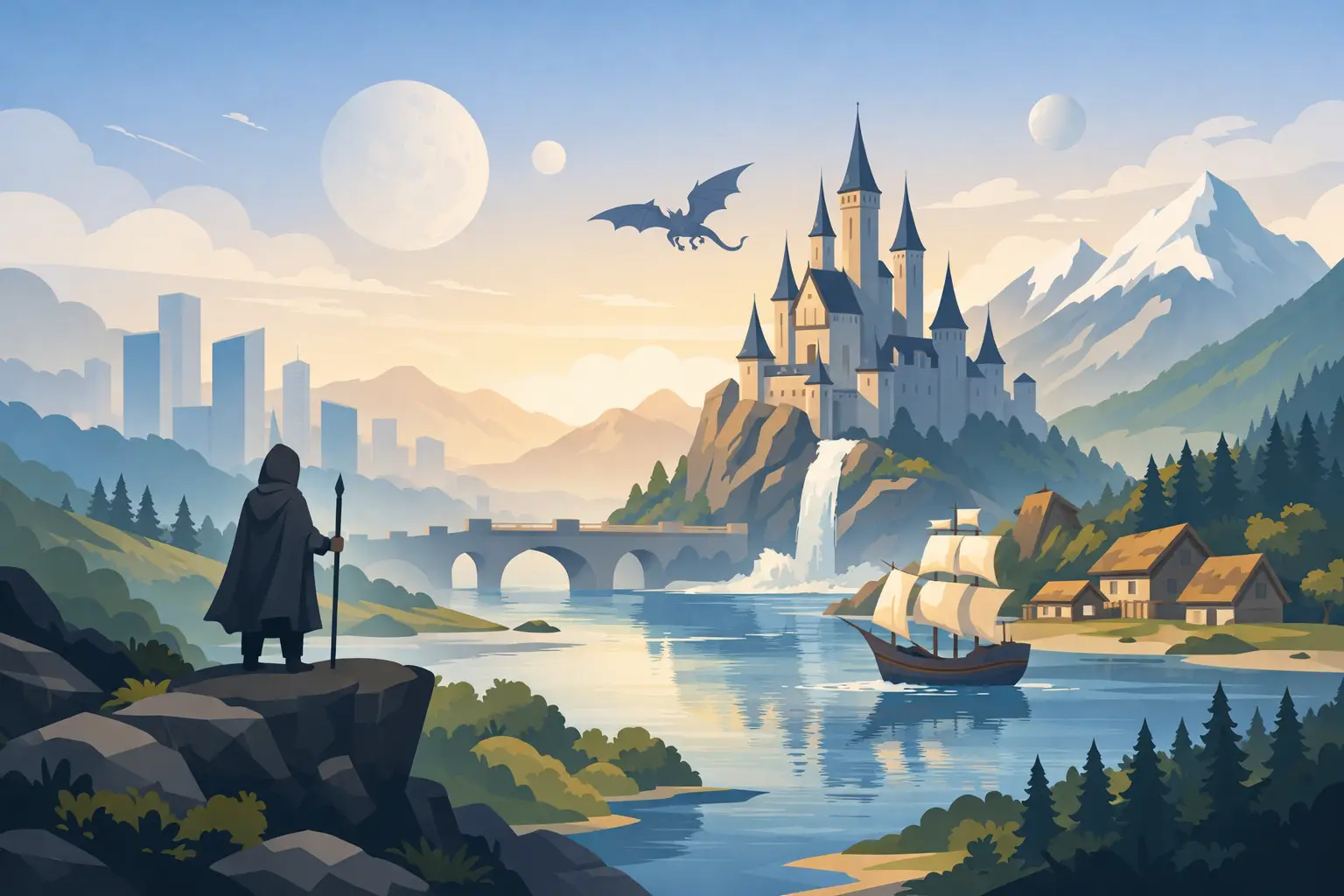
A castle floating above a storm sea can be unforgettable. A city carved into the bones of a giant can stop a reader cold. But spectacle alone is not what makes a fantasy world feel real. The worlds that stay with us – the ones we would gladly step into and fear getting lost inside – feel alive because they move with the weight of consequence, memory, and human feeling.
Readers of fantasy do not ask for realism in the ordinary sense. They will believe in dragonfire, cursed blades, hidden kingdoms, and ancient prophecies without hesitation. What they want is truth inside the impossible. They want a world that behaves as though it existed before page one and will keep turning after the chapter ends.
What makes a fantasy world feel real to readers?
The answer usually begins with pressure. A convincing world presses back on the characters. Roads are dangerous for reasons beyond plot convenience. Kingdoms do not go to war just because a villain needs an army. Magic does not appear only when the hero is cornered. Every force in the setting should feel like it has shape, history, and a cost.
That is why the strongest fantasy worlds are not built from cool ideas stacked side by side. They are built from relationships. The mountain pass matters because traders need it. The sacred forest matters because a people once fled there and never forgot who protected them. The throne matters because one ruler brought peace and another broke it. Place becomes believable when it carries memory.
Readers can feel when a world has only been decorated. They can also feel when it has been lived in. A marketplace with odd fruits and glowing lanterns is colorful. A marketplace where merchants lower their voices when soldiers pass, where one stallkeeper still honors an old king on a forbidden holiday, where coin shortages have made spices more valuable than silver – that begins to feel real.
History gives fantasy weight
A fantasy world gains depth when its past leaves marks on the present. Not a lecture. Not ten pages of royal bloodlines. Marks. Ruins on a hill. Customs no one remembers the origin of. A feud that children inherit before they understand it. Songs with missing verses because the truth became dangerous.
History matters because it creates texture. It tells the reader this world was not invented this morning. It has suffered, celebrated, forgotten, rebuilt, and changed. Even the magic should carry signs of age. Old magic ought to feel different from new magic, not just stronger. It may be less controlled, more sacred, or burdened by older vows.
This is where many worlds either soar or stay flat. A setting becomes powerful when the past is not background wallpaper but an active force. Maybe a bridge still stands because a legendary hero defended it, and that legend now shapes the courage of everyone who crosses. Maybe a lost empire left behind marvels that people still use without fully understanding. That kind of inheritance adds wonder and tension at the same time.
For adventure fantasy especially, history also deepens stakes. A quest means more when it is not only about reaching a destination, but about walking through the consequences of what came before. Every ancient gate, shattered kingdom, or buried oath can turn the journey into something larger than a simple mission.
Real worlds have limits, costs, and contradictions
If everything is possible, very little feels meaningful. One of the clearest answers to what makes a fantasy world feel real is limitation.
Magic should solve some problems and create others. A kingdom with healing arts may still fear plague if those arts are rare, political, or spiritually forbidden. A realm with flying beasts may still struggle with distance if weather, training, or class divides keep those beasts out of common reach. Limits make a setting feel governed rather than improvised.
The same goes for power. Kings should face constraints. Heroes should make trade-offs. Villains should not control half the world unless the world has paid a believable price for letting that happen. Contradiction is part of what gives fantasy its pulse. A noble order of guardians may be brave in battle and blind in judgment. A holy city may be full of devotion and corruption at once. Those tensions feel true because people are rarely pure expressions of one idea.
This does not mean every story needs grim realism. Hopeful fantasy can feel deeply real. In fact, courage, loyalty, and mercy often shine brighter when the world around them is complex rather than simple. Virtue means more when it survives pressure.
Character is the bridge into the world
No reader falls in love with a map by itself. They fall in love with what the world means to someone.
The fastest way to make a setting believable is to let us experience it through desire, fear, duty, grief, and wonder. A training ground is not just a place if it is where a young protector failed once and vowed never to fail again. A ruined temple is not just lore if a traveler kneels there because it reminds him of the mother he lost. Emotion transforms scenery into story.
This is why reader-favorite fantasy series often feel so immersive. We do not just observe the world. We inherit the character’s relationship to it. We learn which roads are sacred, which banners provoke dread, which rivers divide enemies, and which promises still matter. The world becomes real because it has become personal.
For a heroic adventure series, this is especially important. Recurring protagonists give the audience a living thread through expanding settings and rising stakes. Each new place does more than widen the map. It tests the hero’s values. It reveals what they protect, what they fear losing, and how much they are willing to sacrifice for the innocent. That emotional continuity makes the world feel larger without making it feel distant.
The small details matter more than the loud ones
Many writers pour energy into capitals, magic systems, and creature design. Those are exciting. But very often, what makes a fantasy world feel real are the quieter details.
How do people greet each other after a war? What do children dare each other to do near haunted ruins? Which food is considered poor, and which is served only on holy nights? What insult starts a tavern fight in one region but means nothing in another? These details do not need to arrive in heavy blocks. A line here, a gesture there, and suddenly the world has texture.
The trick is restraint. Too much invented detail can feel like a catalog. Too little and the setting slips into generic fog. The sweet spot is choosing details that reveal values. A people who leave lanterns in their windows for missing travelers tell us something about fear, hope, and memory in one image. That lands harder than a paragraph of explanation.
Wonder works best when it meets consequence
Fantasy should still feel wondrous. Readers come for marvels. They want the hidden gate, the impossible beast, the city of light, the blade whispered about for generations. But wonder becomes lasting when it costs something.
A dragon is exciting. A dragon that shaped the border of three kingdoms, inspired worship in one people, terror in another, and a lifelong vow in the hero – that feels like part of a living world. The marvel is no longer an isolated attraction. It has changed law, faith, memory, and identity.
This is the difference between a world that feels staged and one that feels inhabited. In a staged world, extraordinary things appear to impress the reader. In an inhabited world, extraordinary things have consequences that ripple through ordinary life.
That same principle applies to darkness. Evil should not just threaten bodies. It should threaten trust, home, innocence, legacy. When fantasy remembers what is worth protecting, the stakes become more than noise. They become human.
Why some fantasy worlds stay with us
The worlds we remember are rarely the ones with the most facts. They are the ones with the strongest sense of life beyond the frame. We remember places where people believe things for reasons, where old wounds still ache, where courage changes the course of history one costly choice at a time.
A real-feeling fantasy world does not need endless exposition. It needs conviction. It needs the sense that every kingdom, relic, oath, and shadow belongs to a larger whole. Most of all, it needs heart. Readers will follow impossible journeys if the world around them carries truth – the truth of loyalty, sacrifice, danger, hope, and the fierce desire to protect what matters.
That is why the best fantasy does more than transport us. It reminds us that even in endless worlds, what makes a place worth believing in is the same thing that makes any life matter – the bonds we keep, the courage we choose, and the cost we are willing to bear for one another.