
Blogs
Standalone Fantasy vs Series Fantasy

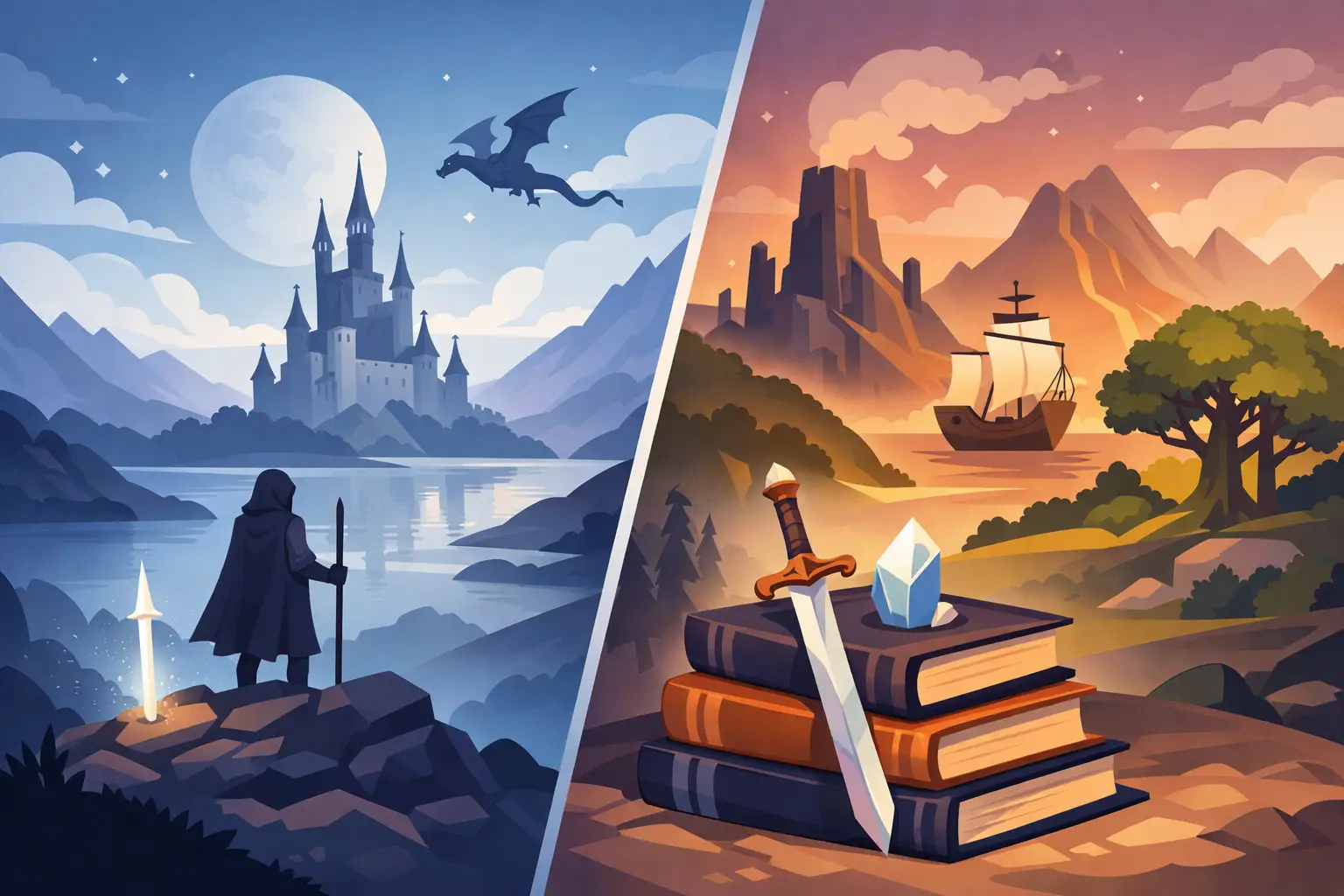
You can feel the difference by page fifty. A standalone fantasy often moves like a single torchlit sprint toward one decisive fate. A series opens a wider road, with deeper shadows, larger kingdoms, and the promise that this first battle is only the beginning. That is the real heart of standalone fantasy vs series fantasy – not which one is better in some absolute sense, but which kind of journey you want right now.
Fantasy readers are rarely choosing between good and bad. More often, they are choosing between two different kinds of magic. One offers a complete adventure in a single volume, with a sharp emotional payoff and a clean ending you can hold in your hands. The other invites you into an expanding saga, where each victory carries weight because greater dangers still wait beyond the horizon.
Standalone fantasy vs series fantasy: what changes for the reader?
The biggest difference is commitment. A standalone asks for your attention for one book and promises resolution by the final page. A series asks for trust. It wants you to invest not only in the current conflict, but in the longer arc of a hero, a world, and a destiny still unfolding.
That changes the reading experience in practical and emotional ways. In a standalone, tension usually burns hotter and faster. The author has limited space, so the central conflict tends to arrive early and matter immediately. The pace can feel urgent, focused, and satisfying, especially for readers who want a full fantasy experience without signing up for four or five books.
A series fantasy has room to breathe. Side characters can grow into favorites. Kingdoms can reveal hidden histories. A single choice in book one can echo with surprising force in book three. That scale creates a special kind of payoff. When a recurring hero falls, rises, sacrifices, or finally faces the enemy behind years of suffering, the moment lands with earned power.
Neither structure automatically creates a better story. It depends on whether you want closure tonight or a world you can live in for months.
Why standalone fantasy hits so hard
A great standalone fantasy often feels like a legend told around a fire – complete, vivid, and unforgettable. It has to know what matters most. There is less room for detours, which means the emotional center often comes through with striking clarity.
That focus benefits readers who love momentum. If you want one hero, one major conflict, one meaningful transformation, and one ending that feels truly finished, a standalone can be exactly right. It is also a strong choice when your reading life is crowded. You do not have to remember a dozen subplots from six months ago or wait a year for the next release.
There is another strength here that fantasy fans sometimes underestimate. Standalones are often bolder with resolution. Because the story is not saving major threads for later books, it can afford to deliver a final confrontation with real finality. The villain is faced. The hidden truth is revealed. The cost is paid. You close the book feeling that the journey mattered from beginning to end.
Of course, there is a trade-off. Some worlds are so rich that a single volume can only show part of their wonder. You may finish a standalone and wish for more time with its characters, politics, magic system, or lore. That ache can be beautiful, but it is still a limit.
Why series fantasy builds deeper loyalty
Series fantasy thrives on attachment. You return not just for plot, but for companionship. Readers who love ongoing sagas know the feeling of opening the next book and stepping back into a familiar world that has grown darker, grander, and more personal since you last visited.
This is where fantasy series can become truly cinematic. The first book lights the torch. The second widens the map. The third raises the cost. By the time the final installment arrives, the stakes are no longer abstract. You know what this world is worth because you have traveled through it, suffered with it, and watched its heroes fight to protect it.
Series also give character arcs room to mature. A brave protagonist can become a battle-tested leader. A frightened companion can become a force of loyalty and courage. Even the moral questions gain weight over time. Justice, sacrifice, mercy, power – these ideas hit harder when characters are forced to confront them again and again under changing circumstances.
For readers who crave immersion, that long-form reward is hard to beat. It is one reason fantasy series inspire such fierce devotion. When a story carries you across multiple books, it stops being a brief escape and becomes part of your inner landscape.
The trade-off, of course, is patience. Not every volume will deliver complete closure. Some endings are meant to haunt you, not satisfy you. If you prefer tidy conclusions, a long series can sometimes feel like a promise forever deferred.
Standalone fantasy vs series fantasy in worldbuilding
Worldbuilding behaves differently in each format. In standalone fantasy, the world usually serves the central story with precision. You get the essential history, the necessary rules of magic, the key cultures, and the immediate dangers. The setting can still feel vast, but it is being revealed through a narrow lens.
That can be a strength. Too much lore can slow a fantasy novel down, especially early on. A standalone often avoids that trap by showing only what deepens the present conflict. The result is a world that feels vivid without becoming heavy.
Series fantasy can do something more expansive. It can let the world unfold layer by layer. A mysterious order mentioned in passing in book one might shape the plot in book three. A border kingdom can turn into the heart of a future war. Ancient magic can remain half understood until the moment its true nature changes everything.
For readers who love lore, maps, prophecy, and rising stakes, series fantasy offers a feast. For readers who want wonder without homework, standalone fantasy may feel more inviting.
Which one works better for emotional payoff?
This is where the answer really depends on your reading mood.
A standalone can deliver a clean, concentrated emotional strike. Because the plot is focused, the climax often gathers every thread into one dramatic release. If the book is well built, that ending can feel immensely satisfying. It is the fantasy equivalent of a single heroic stand that changes everything.
A series often aims for cumulative emotion. The payoff is not only in one battle or revelation, but in everything that led there. The bond between characters is deeper. The losses cut further. The triumph feels larger because it has been delayed, tested, and earned over time.
If you want immediate catharsis, standalone fantasy often wins. If you want the kind of emotional reward that grows book by book until it becomes almost impossible to shake, series fantasy has the edge.
How to choose your next read
Start with your appetite for commitment. If you are between larger reads, feeling restless, or simply want a complete adventure with no waiting, pick up a standalone. It can give you magic, danger, wonder, and heart in one bold sweep.
If you are hungry for a hero you can follow across multiple trials, a world that opens wider with every turn, and stakes that keep rising as destiny closes in, choose a series. That is where fantasy becomes an ongoing bond rather than a passing thrill.
It also helps to think about what you remember most from your favorite books. If you treasure endings, standalones may fit your taste better than you think. If you treasure returning to beloved characters and seeing them grow through fire, series fantasy is probably where your deepest loyalty lives.
And yes, some readers want both. They read standalones between bigger sagas. They use one to reset and the other to sink in. That is often the smartest approach, because reading is not a fixed identity. It changes with the season, your mood, and the kind of courage or wonder you need most.
For readers who love quest-driven stories, recurring heroes, and the feeling that one adventure leads to another greater one, series fantasy often feels like home. That enduring bond is part of what gives a saga its power, and it is why stories built around one legendary journey can stay with us long after the final page.
The best choice is the one that meets you where you are – at the edge of a single unforgettable battle, or at the beginning of an epic road that still has miles of magic ahead.