
Blogs
High Fantasy vs Epic Fantasy Explained

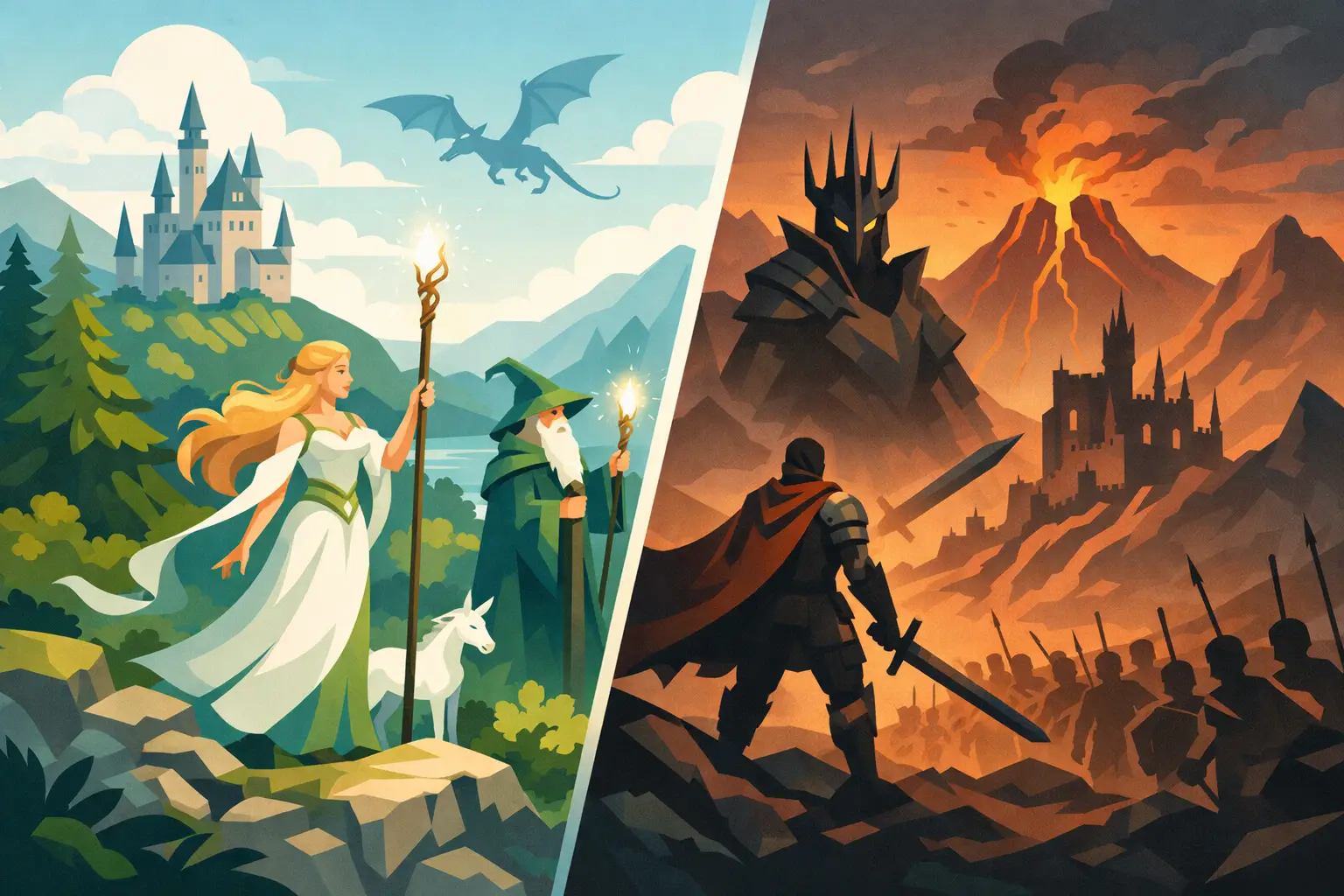
A kingdom on the brink. A young hero called beyond the safety of home. Ancient magic waking in the dark. If you have ever stood in a bookstore wondering about high fantasy vs epic fantasy, you are not alone. The two terms are often used like they mean the same thing, but they point to different strengths in a story, and knowing the difference can help you find your next unforgettable adventure.
Fantasy readers tend to recognize the feeling before they recognize the label. Some stories sweep you into a fully imagined world with its own history, creatures, and rules of magic. Others hit you with the force of a grand campaign – nations in conflict, destinies colliding, and stakes so large they seem to shake the stars. Sometimes a book does both. That overlap is exactly why the confusion sticks around.
High fantasy vs epic fantasy: the core difference
The simplest way to separate high fantasy vs epic fantasy is this: high fantasy is mostly about setting, while epic fantasy is mostly about scale.
High fantasy takes place in a secondary world, meaning a world completely separate from our own. It has its own landscapes, cultures, power structures, histories, and often its own myths. When readers talk about being transported somewhere else, this is usually the kind of story they mean. The magic is not an intrusion into everyday reality. It belongs there. The world was built to hold it.
Epic fantasy, on the other hand, is defined less by where the story happens and more by how large it feels. The stakes are sweeping. The cast may stretch across kingdoms. The conflict often affects entire peoples, realms, or ages of history. Epic fantasy is interested in consequence. It asks what happens when courage fails, when darkness rises, or when one person’s choices alter the fate of thousands.
That means a story can be high fantasy without being especially epic, and it can be epic without fully fitting the classic high fantasy mold. But very often, the two walk together.
What makes a story high fantasy?
High fantasy is the genre of elsewhere. It invites readers into a world that does not depend on hidden portals, modern cities, or familiar reality to create its wonder. From the first chapter, the story breathes its own air.
That matters because worldbuilding is not just decoration in high fantasy. It shapes everything. Political tensions, magical systems, religions, social customs, and old legends all influence the plot. A hero’s journey feels richer because the world around that hero feels ancient, lived-in, and worth saving.
This is why high fantasy often appeals to readers who love immersion. They want maps they can imagine unfolding on a war table. They want ruined towers with histories behind them. They want magic that carries mystery, cost, or sacred weight. The pleasure is not only in what happens next. It is in the sense that the story exists inside a much larger realm.
Still, not every high fantasy tale needs world-ending stakes. A story can be intimate and remain firmly high fantasy if it takes place in a fully invented world. A prince fleeing a coup, a healer protecting a sacred relic, or a band of travelers crossing a haunted valley can all belong here, even if the fate of the entire world is not hanging by a thread.
What makes a story epic fantasy?
Epic fantasy is built for grandeur. It thrives on momentum, rising danger, and the kind of conflict that calls heroes to stand when retreat would be easier. The scale is emotional as much as geographic.
An epic fantasy story often stretches across long distances and multiple power centers. You may follow a warrior on the battlefield, a ruler inside a fractured court, and a reluctant hero carrying a burden no one else can bear. Their paths may start apart, but eventually they collide inside a larger struggle.
The stakes in epic fantasy are rarely private for long. A single village may fall in chapter one, but before long the threat reaches kingdoms, alliances, prophecies, and entire peoples. The villain or opposing force usually carries symbolic weight too. This is not just a personal grudge. It is a test of what kind of world will survive.
That said, epic does not always mean huge page counts or endless lore. A story can feel epic because of the pressure it creates, the moral choices it demands, and the sense that history is being written in real time. What matters is scale, consequence, and emotional force.
Where high fantasy and epic fantasy overlap
This is where things get exciting for fantasy readers. Many beloved fantasy series are both high fantasy and epic fantasy. They unfold in secondary worlds and also carry immense stakes. You get the immersive wonder of entering an invented realm and the thunder of a conflict that could change everything.
When the two combine well, the result is powerful. The world feels vast enough to inspire awe, while the central struggle gives that world urgency. Readers are not just admiring castles, creatures, and magical orders. They are feeling what is at risk if darkness wins.
That blend is part of what makes long-form fantasy series so compelling. Each book can widen the map, deepen the mythology, and raise the stakes, all while keeping readers anchored to a heroic through-line. For readers who love one legendary journey unfolding across multiple adventures, this combination is hard to resist.
Why the labels get blurry
Genre labels are useful, but they are not laws carved in stone. Publishers use them. Reviewers use them. Readers use them differently depending on what stands out most.
A novel set in a fully imagined world may get called epic simply because it feels grand. Another may involve a kingdom-wide war but still get labeled high fantasy because the setting dominates the reading experience. There is also the reality that fantasy has evolved. Modern books mix subgenres freely. You will find stories that combine high fantasy worldbuilding with epic stakes, dark fantasy mood, coming-of-age emotion, and adventure pacing.
That is not a problem. It is part of the genre’s magic. The labels help you get oriented, but the heart of the story matters more than the shelf tag.
High fantasy vs epic fantasy for readers choosing their next series
If you are deciding what to read next, the better question may not be which label is correct. It may be what kind of experience you want.
Choose high fantasy when you want to disappear into another world. If you crave rich lore, magical cultures, and the thrill of stepping beyond ordinary reality, high fantasy delivers that sense of transport. It rewards readers who love atmosphere, history, and the slow reveal of a world larger than the first chapter can show.
Choose epic fantasy when you want rising stakes and a conflict that feels legendary. If you are hungry for battlefield tension, burdens of destiny, and heroes facing choices that affect countless lives, epic fantasy gives you that charged, cinematic momentum.
And if you want both, look for stories that promise a fully imagined world and a quest with consequences far beyond the hero’s own survival. That combination often creates the most memorable kind of series fiction – the kind where each victory costs something, each betrayal matters, and each act of courage feels like a light against the storm.
For many readers, that is the sweet spot. It is where wonder meets sacrifice. It is where loyalty is tested, innocence needs protecting, and the journey becomes more than a mission. It becomes a calling.
Which label fits your story best?
For writers, the distinction can sharpen how a book is presented. If the strongest hook is the invented world itself, high fantasy may be the clearest fit. If the main appeal is the scale of the conflict and the fate hanging over nations, epic fantasy may speak more directly to the right readers.
But there is no prize for choosing the narrowest box. A book should be described by its strongest promise. If it offers readers a magical world, a heroic central figure, and a struggle that grows larger with every step, then it may live comfortably in both spaces. That is often a strength, not a complication.
Readers who love fantasy adventure are not usually hunting for labels alone. They are hunting for feeling. They want danger with purpose, wonder with heart, and a journey big enough to matter. That is part of why stories in the spirit of Tommy Lee Davis’s adventurous fantasy world resonate so strongly. They offer not only spectacle, but the emotional fire that keeps readers turning pages.
The next time you hear high fantasy vs epic fantasy, think of it this way: one tells you where the magic lives, and the other tells you how far the fire will spread. If a story gives you a world worth entering and a battle worth caring about, you are already standing at the gates of something memorable.