
Blogs
Epic Fantasy Versus Sword Sorcery Explained

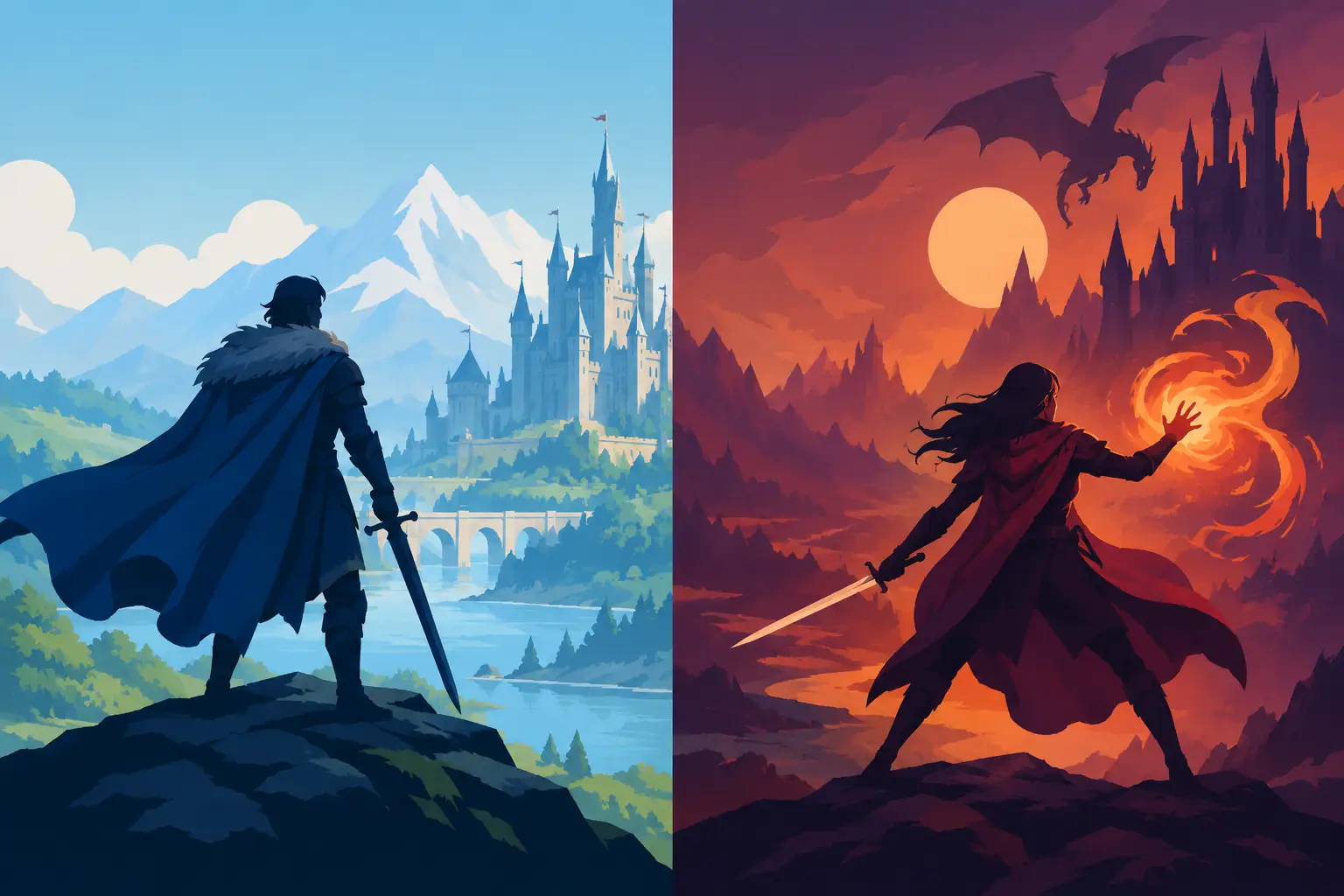
A lone warrior faces a cursed tower with a blade in hand. Across the mountains, a young hero carries a choice that could decide the fate of every kingdom. Both promises can lead to unforgettable adventure, yet epic fantasy versus sword sorcery is more than a debate about the size of the map. It is a difference in where the story places its fire: in the fate of a world, or in the desperate courage of one person standing close enough to feel the monster’s breath.
For readers who love magic, danger, and heroes tested beyond their limits, both subgenres offer rich territory. Knowing what separates them can help you find your next legendary journey – or better understand why certain fantasy stories stay with you long after the final page.
Epic Fantasy Versus Sword Sorcery: The Essential Difference
Epic fantasy usually begins with a world under pressure. An ancient evil wakes. A throne is contested. A war spreads across nations. The hero’s private struggle matters, but it is tied to something larger: the survival of a people, the restoration of justice, or the future of a realm.
Sword and sorcery brings the lens closer. Its heroes are often wanderers, thieves, mercenaries, warriors, or outcasts. They may enter ruined cities, haunted temples, and treacherous courts, but the immediate goal is often personal. Escape with the treasure. Rescue a companion. Break a curse. Survive a sorcerer’s trap before dawn.
That does not mean sword and sorcery lacks heart or consequences. A single adventure can carry enormous emotional weight. The difference is scale. Epic fantasy tends to ask, “Can this hero help save the world?” Sword and sorcery often asks, “Can this hero survive this terrible night?”
Both questions can make a reader turn pages well past bedtime.
The Grand Canvas of Epic Fantasy
Epic fantasy is built for readers who want to live inside another world for a while. It often unfolds across multiple lands, cultures, histories, and conflicts. The setting is not merely a backdrop for action. It has legends, scars, rival powers, old betrayals, and mysteries that shape every hard choice.
A quest is a common engine for the genre, but the best epic quests carry more than a destination. The travelers must become worthy of the task. Courage is tested when victory looks impossible. Loyalty is tested when allies disagree. A hero may learn that protecting the innocent requires sacrifice, not applause.
Magic in epic fantasy is often woven into the world’s deeper order. It may be tied to bloodlines, ancient covenants, forgotten gods, or forces that can remake reality. Readers get the pleasure of seeing how those rules affect kingdoms as well as individuals. When magic fails, wars may be lost. When it is misused, entire generations may suffer.
This broad scope gives epic fantasy its cinematic feeling. Armies gather beneath storm-dark skies. Ancient doors open. Friends who began as strangers discover they are bound by a purpose larger than themselves. A continuing series can deepen that power because each book lets the consequences grow. A small act of mercy in one volume may become the reason a kingdom survives in the next.
The trade-off is patience. Epic fantasy commonly asks readers to learn names, places, alliances, and history before the full storm breaks. For many fantasy fans, that is not a burden. It is part of the reward.
The Sharp Edge of Sword and Sorcery
Sword and sorcery thrives on immediacy. The hero is usually already capable, or at least bold enough to act before anyone else will. Rather than waiting for a prophecy to explain their destiny, they confront danger because there is gold to win, someone to protect, a wrong to answer, or no safer path left.
The settings can still be fantastic on a grand scale. There may be fallen empires, demon-haunted wilderness, decadent cities, and magic older than civilization. Yet the story stays grounded in the hero’s immediate peril. A locked door, a poisoned goblet, a rival with a knife, and a spell that demands a price can matter more than the politics of distant nations.
Sorcery in this tradition often feels dangerous, strange, and corrupting. Steel is honest. Magic is not. A sword has a clear purpose, while a wizard’s bargain may hide a trap in every word. That tension gives the subgenre its signature atmosphere: hot sand, cold ruins, torchlight, and the sense that one poor decision could awaken something that should have remained buried.
Sword and sorcery also tends to move quickly. It can deliver a complete, satisfying adventure in a compact space, making it ideal for readers who want momentum and vivid action without a long runway. The cost of that speed is that the wider world may remain suggestive rather than fully mapped. The reader sees a thrilling corner of the world, not always its entire history.
Heroes: Chosen Guardians and Reluctant Survivors
The hero is where these genres most often meet. Whether a protagonist bears a crown, a blade, or both, fantasy readers respond to characters who choose courage when fear would be easier.
In epic fantasy, the hero may begin ordinary or uncertain. Their journey often changes them from someone reacting to danger into someone capable of carrying responsibility. They are not powerful simply because fate names them special. Their lasting strength comes from the choices they make for others when the cost becomes real.
A sword-and-sorcery protagonist may be less concerned with destiny and more skeptical of grand causes. They can be rough-edged, practical, and willing to challenge kings as readily as monsters. Yet beneath the swagger, the most memorable heroes still reveal a moral center. They may not call themselves protectors, but when the vulnerable are threatened, they act.
This is why readers do not have to choose one kind of hero forever. Some days call for a sprawling fellowship crossing a continent to stop a rising darkness. Other days call for a lone adventurer walking into a sorcerer’s lair because no one else will.
Where the Genres Overlap
The boundary between epic fantasy and sword and sorcery is not a wall. It is a shifting frontier. An intimate adventure can grow into a world-changing saga. An epic series can pause its wars and prophecies for a tense, personal mission inside one cursed fortress.
Many modern fantasy stories borrow the strengths of both. They pair the escalating stakes and emotional continuity of epic fantasy with the urgency of sword and sorcery. The result can be a series where each book offers a satisfying adventure while building toward a greater conflict.
That blend is especially powerful for readers who want both wonder and momentum. They want endless worlds, but they also want a hero who feels human enough to bleed, doubt, fail, and rise again. In a series such as Asim’s Extraordinary Journeys, that balance lets a recurring protagonist face immediate dangers while the larger journey continues to gather meaning.
Which Fantasy Adventure Is Right for You?
Choose epic fantasy when you want a sweeping journey with layered worldbuilding, recurring companions, expanding stakes, and a conflict that reaches beyond one hero’s survival. It is the right shelf when you want to watch courage reshape a kingdom and see separate story threads unite in a hard-won reckoning.
Choose sword and sorcery when you want a faster, sharper tale driven by danger at arm’s length. It is a strong choice when you crave haunted ruins, fierce duels, forbidden magic, and a protagonist who must rely on instinct as much as honor.
Of course, mood matters more than rules. A reader can love the thunder of an epic battle and still crave a lean, perilous tale the next week. The real question is not which subgenre is better. It is what kind of adventure your imagination is asking for tonight.
There is always another gate to cross, another shadowed path to follow, and another moment when a hero must decide what they are willing to risk for someone else. Choose the journey that calls to you, then step boldly into the pages.