
Blogs
Fantasy Series Versus Duologies: Which Wins?

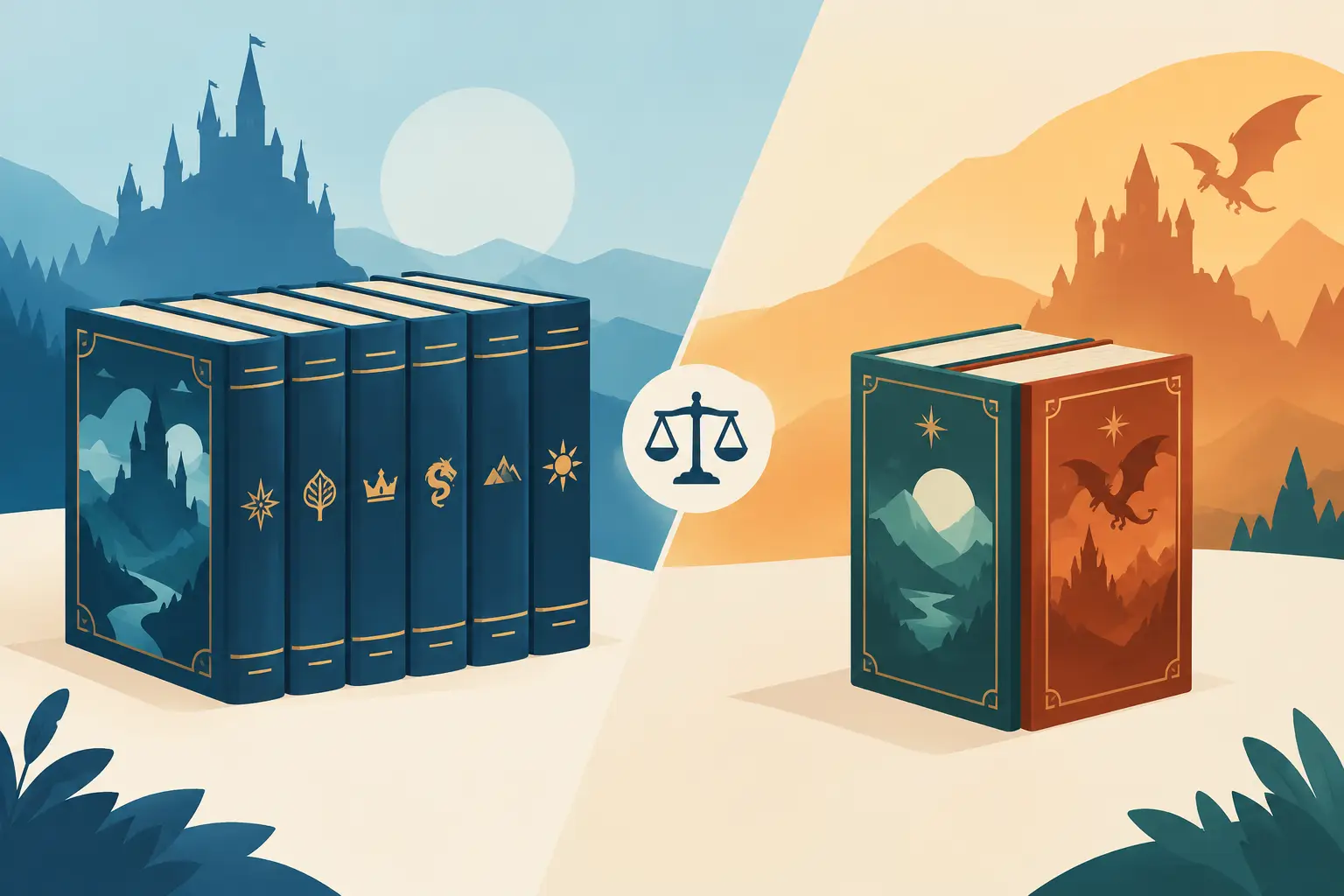
A map spreads across the table. A young hero hears a call no one else can answer. Beyond the city gates, an ancient evil is waking – and the reader has one delicious question: how long can this adventure last? In the conversation around fantasy series versus duologies, there is no single champion. There is only the kind of journey a reader wants to carry into the unknown.
Some stories need room for kingdoms to rise, friendships to be tested, and a hero to grow through more than one impossible trial. Others strike hardest when the danger comes fast, the emotional stakes stay close, and the final page arrives like the last clash of swords. Both forms can create wonder. They simply make different promises.
Fantasy Series Versus Duologies: The Heart of the Choice
A fantasy series invites readers to settle in. It says there are more doors ahead, more secrets in the old forest, more scars and victories waiting for the characters they have come to love. A duology makes a sharper offer: come with me for two powerful books, and together we will see this conflict through.
The difference is not merely book count. It shapes pacing, character arcs, worldbuilding, and the emotional rhythm of the reading experience. Readers who crave a long stay in a magical world often gravitate toward series. Readers who want a complete, focused quest without a major time commitment may prefer two-book stories.
Neither preference is shallow, and neither means a reader loves fantasy more than the other. Sometimes the same reader wants an enormous saga after finishing a quick, intense adventure. The mood matters. So does the story itself.
Why a Fantasy Series Feels Like Coming Home
The greatest strength of a longer series is accumulation. Every return to the world carries history. A quiet village may become meaningful because readers remember who was saved there in an earlier book. A side character can emerge as a trusted companion. A small act of courage in book one may echo through a kingdom-changing choice in book four.
That continuity creates a rare kind of attachment. Readers do not just witness a hero’s journey – they live beside the hero long enough to recognize how far they have come. The reckless apprentice becomes a leader. The lonely wanderer finds a chosen family. The protector who once fought only to survive learns what it means to stand for the innocent, even when the cost is enormous.
Series also give fantasy worlds room to breathe. A writer can begin with one city, one mission, or one looming threat, then expand the horizon naturally. New lands can reveal old truths. Allies can carry loyalties that complicate the central conflict. The magic system can grow stranger and more dangerous as the stakes rise.
This is especially rewarding for readers who love epic adventure. They want the sense that the road keeps stretching beyond the next mountain range. They want victories that feel earned because the heroes have endured loss, betrayal, training, travel, and the hard work of choosing hope again.
A four-book arc, such as Asim’s Extraordinary Journeys, can offer that satisfying middle ground: enough space for a legendary journey to deepen, while still giving readers a clear path through the adventure.
The trade-off of going long
A series can ask for patience. Early books may need to establish the rules of the world and lay foundations that will matter later. Not every question can be answered at once, and not every threat can be defeated in a single battle.
For some readers, that is part of the magic. For others, it can feel like waiting outside a locked gate. The best series honor the reader’s time by giving each installment its own meaningful conflict, emotional payoff, and reason to turn toward the next chapter of the larger tale.
What Duologies Do Exceptionally Well
Duologies have a special kind of force. With only two books, the author must know where the journey begins, where it breaks open, and where it lands. There is little room for wandering simply because the world is interesting. Every revelation needs weight. Every relationship needs to move.
The first book often creates a thrilling promise: a dangerous mission, a magical mystery, a broken alliance, or a choice that changes everything. The second book then pays that promise off. The result can feel clean, urgent, and emotionally direct.
For readers, a duology can be an ideal escape when life is busy but the hunger for adventure remains. It offers enough time to become invested in a world and its heroes, yet it does not require months of reading or memorizing a growing cast before the final confrontation arrives.
Duologies can also give romance, rivalry, and personal transformation a powerful spotlight. Rather than spreading a character’s development over many volumes, they place that character under pressure quickly. A hero may have only two books to face fear, claim responsibility, and decide what they are willing to sacrifice for the people they love.
The trade-off of a shorter quest
The limitation of a duology is also its discipline. Some worlds are too vast, or some ensemble casts too rich, to reach their full potential in two books. If a story introduces five kingdoms, an ancient magical order, a rebellion, and a family curse, it may need more page space than a duology can provide.
A rushed ending is the danger. Readers can feel when the final battle solves problems that needed more time to grow. The strongest duologies avoid this by keeping their central promise clear. They may have a wide world, but they choose one primary wound to heal and one defining conflict to resolve.
Choose by the Adventure You Want Right Now
If you are deciding what to read next, think less about which format is objectively better and more about what you want to feel when you open the first page.
Choose a fantasy series when you want to invest deeply in recurring heroes and watch their bonds change over time. It is a strong fit when you enjoy layered worldbuilding, escalating threats, and the anticipation of knowing another journey waits after the current one ends. A series is for the reader who wants to pack provisions, learn the names of distant realms, and stay until the final banner rises.
Choose a duology when you want a complete arc with momentum. It is ideal when you are looking for a story that moves with purpose, reaches a true ending, and still leaves room for wonder. A duology is for the reader who wants to cross a perilous bridge, face the dragon, and arrive home changed before the season turns.
There is also a practical consideration: unfinished series. Some readers prefer duologies because they know the complete story is already within reach. Others happily begin a continuing saga because they enjoy anticipation and trust the journey to unfold. Neither approach is wrong. Reading should feel like an invitation, not an obligation.
The Best Format Serves the Promise
A story about one urgent rescue may be stronger as two books. A tale about a young hero growing into the defender of an entire world may need a longer road. What matters is whether the format gives the story enough room to deliver on its promise without losing its fire.
Great fantasy, whether told in two books or ten, leaves readers with more than a map and a battle scene. It leaves them with courage when courage is costly, loyalty when loyalty is tested, and the memory of a hero who chose to protect others when darkness seemed certain to win.
So choose the journey that calls to you. A duology may give you a swift, blazing quest. A series may give you a world to return to again and again. Somewhere beyond the familiar road, the right adventure is waiting with its gates already open.