
Blogs
A Guide to Fantasy Hero Arcs That Feel Earned

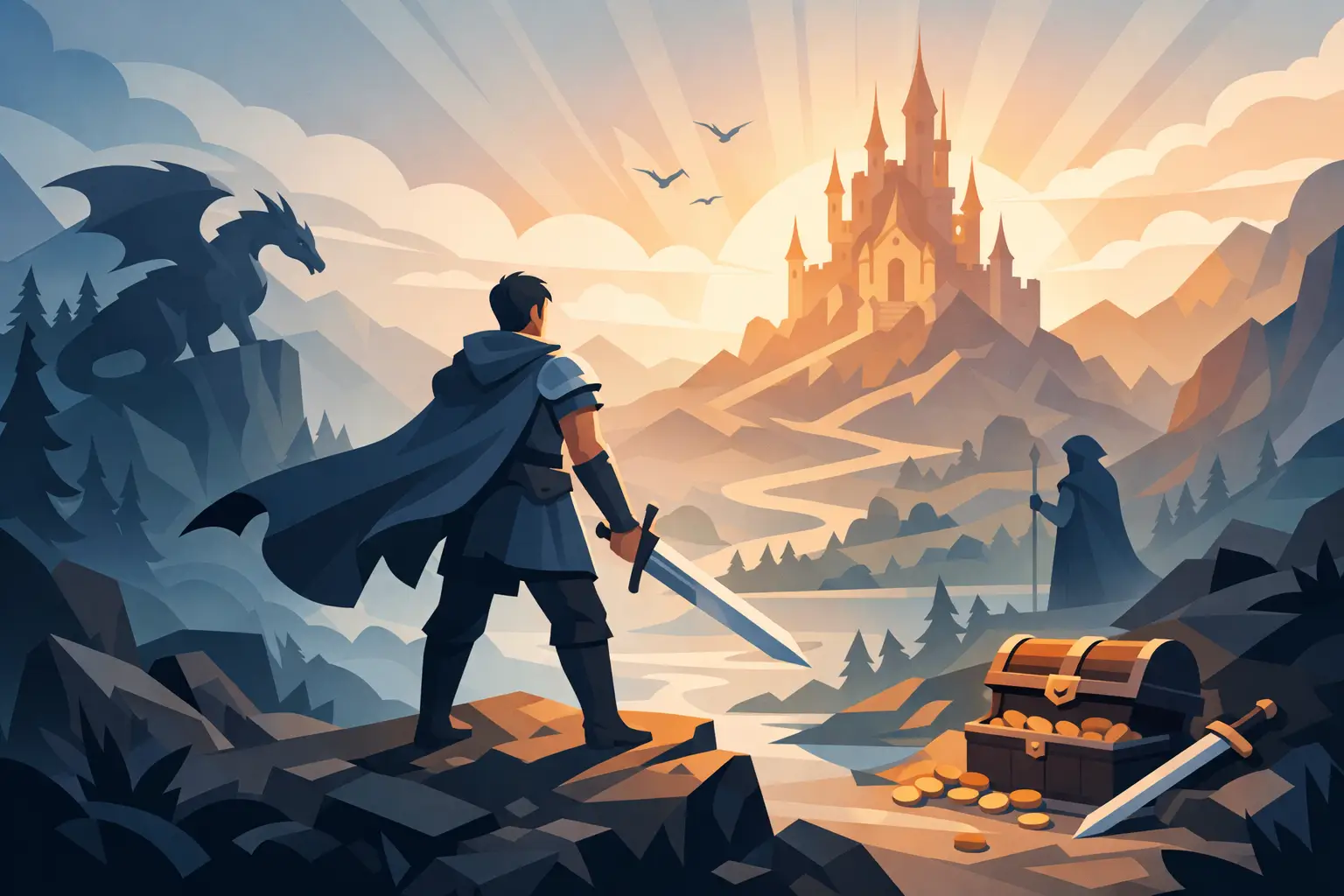
A crown can be recovered in a single battle. A monster can fall with one well-placed blade. But a hero becomes unforgettable only when the victory costs them something they were not ready to give. This guide to fantasy hero arcs is for writers who want more than a chosen one with a prophecy and a sword. It is for building a character readers will follow through dark forests, ruined kingdoms, impossible choices, and the long road home.
Fantasy gives a hero enormous room to move. They may cross endless worlds, command strange magic, face ancient tyrants, or carry the fate of the innocent on their shoulders. Yet spectacle alone does not create emotional power. The reader stays because the person at the center changes – not because the map gets bigger.
What a Fantasy Hero Arc Must Deliver
At its heart, a hero arc is the distance between who a character is at the beginning and who they choose to become when the stakes are highest. The external quest gives that change pressure. The internal struggle gives it meaning.
A young warrior may begin desperate to prove their worth. A gifted mage may hide behind knowledge because trust once brought pain. A prince may believe leadership means control, until protecting his people requires him to listen, share power, or accept help. The dragon, the enemy army, and the cursed relic matter because they force these buried beliefs into the open.
A satisfying fantasy hero does not simply gain power. They gain clarity. Sometimes that means learning courage. Sometimes it means learning that courage without mercy becomes cruelty. A character who starts as kind but passive may need to discover the strength to act. A character who starts fearless may need to learn restraint. The finest arcs keep the lesson specific to the hero’s wound, flaw, and values.
That is why a prophecy is never enough. Being told someone is destined to save the realm creates a premise. Watching them decide to save someone when no reward is promised creates a hero.
A Guide to Fantasy Hero Arcs: Start With the Inner Lie
Before planning the final confrontation, identify the belief your protagonist carries that cannot survive the story unchanged. This is often called the inner lie, but it does not have to be a literal falsehood. It can be a protective conclusion the character formed after loss, betrayal, failure, or fear.
Perhaps your hero believes no one else can be trusted. Perhaps they think their magic makes them dangerous and unworthy of love. Perhaps they have spent years convinced that bloodline determines destiny, even while their actions reveal a more complicated truth. This belief should make sense. A hero feels real when readers understand why they cling to the thing that is holding them back.
Then build the quest so it repeatedly challenges that belief. If your hero refuses help, do not give them a journey they can complete alone. Give them companions with skills they lack, people they may lose because of their isolation, and a final trial that cannot be won without trust.
The important distinction is this: a flaw should create consequences, not merely flavor. A sarcastic hero who occasionally pushes friends away is entertaining. A hero whose refusal to trust leads an ally into danger creates an arc. The second version demands change.
Let the outer enemy expose the inner struggle
A fantasy villain becomes more memorable when they reflect, tempt, or sharpen the hero’s central conflict. The antagonist does not need the same backstory, but they should represent a path the hero might take.
If the hero fears weakness, the villain may worship strength at any cost. If the hero longs for revenge, the villain may offer revenge wrapped in the language of justice. If the hero believes the world is too broken to save, the villain may be someone who has surrendered to that same despair and now rules through it.
This connection makes the final clash more than a contest of spells or steel. The hero is confronting a possible version of themselves. Defeating the enemy means rejecting an easier, darker answer to their pain.
Give the Hero a Choice, Not Just a Challenge
A towering obstacle tests ability. A difficult choice reveals character.
Fantasy stories naturally produce grand challenges: crossing a poisoned sea, surviving a siege, finding the lost temple before an eclipse. Use them. They create momentum and wonder. But at key moments, make the protagonist choose between competing values. Let the decision hurt.
They may have to choose between pursuing the artifact that could end the war and staying behind to protect a village. They may need to reveal a dangerous truth that could divide their companions. They may be offered the power to save one person they love, knowing it will endanger thousands they have never met.
There is no need to make every choice morally impossible. Constant misery can flatten a story. But the pivotal choices should show that heroism is not the absence of fear or loss. It is a willingness to act with integrity when every path carries a cost.
Readers also need to see the hero make mistakes. A perfect protagonist can win battles, but they rarely inspire devotion. Let them misjudge an ally, choose anger over wisdom, or rush ahead because they cannot bear to fail again. Then allow the consequences to teach them. Growth feels earned when the hero does not escape the price of their earlier self.
Build the Arc Across a Series
In a fantasy series, each book needs its own emotional movement while contributing to a larger transformation. If the hero learns every lesson in book one, later adventures can feel like repetitions with larger explosions.
Think of growth as a widening circle. Early in the saga, the protagonist may learn to survive, accept companionship, or claim a small responsibility. In the next stage, that responsibility expands. They must lead others, face the consequences of their choices, and protect people whose hopes now rest on them. By the final book, the question is no longer whether they can become brave. It is what kind of brave person they will be when the whole world is watching.
Asim’s extraordinary journeys can be understood through this kind of series promise: every new threat should reveal a deeper layer of the hero, not simply a stronger enemy. A recurring protagonist earns reader loyalty when each return brings both familiar courage and a new, meaningful test.
Keep a few elements consistent across the books: the core wound, the values under pressure, and the relationships that matter most. Then change the circumstances. A hero who once needed a friend to save them may later need to save that friend without becoming controlling. A leader who learned to trust their team may eventually have to let them choose a dangerous path for themselves.
Use Companions to Make Change Visible
A hero’s inner life becomes clearer when it affects relationships. Loyal companions are not decorations for the quest. They are witnesses, challengers, protectors, and sometimes the people who refuse to let the protagonist hide.
One companion might see the goodness beneath the hero’s anger. Another may call out the hero’s arrogance. A mentor can offer wisdom, but should not solve the central problem for them. If the mentor’s advice always produces the answer, the protagonist remains a passenger in their own legend.
Give major relationships their own turning points. Trust can be offered, broken, rebuilt, or tested. A friend may disagree with the hero’s plan but remain loyal to the person. A companion’s vulnerability may awaken the hero’s instinct to protect the innocent. These moments ground vast magical worlds in recognizable human feeling.
Romance can support a hero arc, but it should not replace it. Love is most powerful when it reveals what the character fears, values, or must change. It should not arrive as a prize for winning the war.
Make the Final Victory Prove the Change
The climax should demand the very growth the hero resisted earlier. If they began unable to trust, the final victory should require trust. If they believed strength meant domination, they should win by protecting rather than controlling. If they ran from their identity, the last battle should require them to claim it on their own terms.
This does not mean every hero must sacrifice their life, lose their magic, or reject a throne. Those endings can work, but only when they grow naturally from the story. The real question is whether the climax makes the hero choose differently than they would have chosen in chapter one.
After the battle, leave room for the quieter proof. Show the hero returning to a place that once frightened them, speaking honestly to someone they once shut out, or placing power in another person’s hands. The realm may celebrate the legendary victory, but a small act can reveal the deepest change.
A hero arc becomes lasting when readers can feel the person beneath the armor. Give your protagonist wonders to chase, enemies to face, and worlds worth saving. Then give them one truth they must earn in the fire. That is the journey readers carry with them long after the final page.