
Blogs
How to Choose Epic Quest Novels You’ll Remember

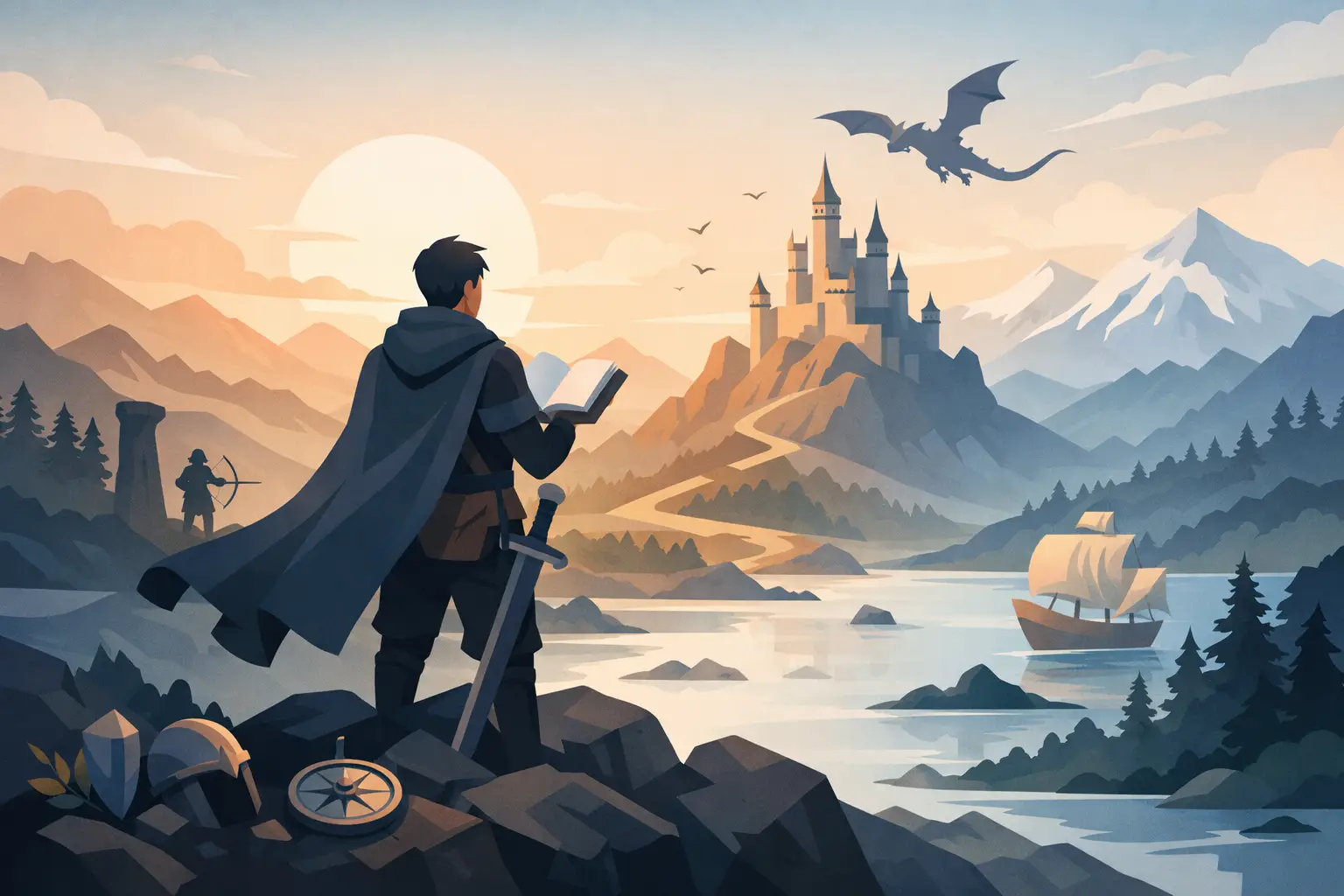
A quest begins when someone can no longer ignore what is wrong. A kingdom is threatened, an innocent life hangs in the balance, an ancient evil stirs, or a young hero realizes that running away would cost more than standing firm. If that promise makes you want to turn the page, learning how to choose epic quest novels is less about finding the biggest map or the longest series and more about finding a journey that gives its danger a beating heart.
The best quest fantasy carries you beyond familiar borders while giving you someone worth following through every dark forest, shattered fortress, and impossible choice. It should offer wonder, certainly, but also courage, loyalty, and consequences that feel real. Here is how to find the kind of epic adventure that stays with you long after the final battle.
Start With the Hero You Want to Follow
A vast fantasy world means little if its central character leaves you cold. Before choosing a quest novel, look for the person at the center of the journey. Are they driven by a promise? Haunted by a failure? Protecting someone who cannot protect themselves? A powerful hero can be exciting, but a hero with something to lose is memorable.
Quest stories often begin with an ordinary person pushed toward an extraordinary calling. That familiar shape works because it lets readers step into the adventure alongside the protagonist. Still, not every hero needs to be reluctant or inexperienced. You may prefer a seasoned guardian, a clever outcast, a royal heir carrying an unwanted duty, or a band of allies with different reasons for facing the same threat.
What matters is movement. The hero should not finish the story unchanged. Trials should test more than their sword arm or magical ability. They should challenge their fears, convictions, relationships, and sense of who they are. When the final victory costs something and reveals something, the quest earns its epic scale.
Look for Stakes That Are Both Vast and Personal
Epic quest novels frequently promise armies, ancient prophecies, lost kingdoms, and world-changing battles. Those are wonderful ingredients, but spectacle alone does not create emotional weight. The strongest stories pair enormous danger with a personal reason to care.
Perhaps the hero must save a realm, but also rescue a sibling. Perhaps a magical artifact could destroy the world, but using it might corrupt the one person determined to protect the innocent. The fate of nations matters more when it is reflected in a single friendship, family bond, or hard-won act of trust.
When reading a book description or sample, ask yourself whether the stakes feel specific. “The world is in danger” is a beginning, not a reason to invest. Who will suffer if the hero fails? What moral line might they have to cross to succeed? A great quest makes victory feel uncertain and the right path feel even harder.
Choose Epic Quest Novels With a World You Can Feel
Worldbuilding is not a catalog of place names. It is the feeling of cold stone beneath a traveler’s hand, the hush that falls when forbidden magic is spoken aloud, and the strange customs of a city built where dragons once ruled. A fantasy world becomes alive when its history, magic, conflict, and daily life shape the choices characters make.
Some readers want sprawling worlds with multiple kingdoms, detailed histories, political rivalries, and a cast that grows with every book. Others want a tighter adventure focused on one cursed valley, haunted sea, or hidden realm. Neither preference is better. The right choice depends on whether you enjoy wandering through every corner of a world or racing beside a hero toward the next peril.
Pay attention to the kind of magic the story promises. Is magic mysterious and dangerous, with rules uncovered slowly? Is it woven into the culture, economy, and warfare of the world? Or does it appear mainly to create dazzling moments of wonder? Each approach can work, but readers who love problem-solving may prefer clear limitations, while readers drawn to mythic atmosphere may enjoy magic that remains partly unknowable.
A well-built world also has shadows. It does not need to be relentlessly bleak, but danger should leave a mark. A quest feels urgent when the world contains something precious enough to defend and something dark enough to fear.
Decide What Kind of Adventure Pace You Crave
Not every epic quest novel moves at the same speed. Some open with a chase, a siege, or a shocking betrayal. Others spend more time establishing a village, a family, or a hidden power before the first true call to adventure arrives. Your ideal book depends on what brings you joy as a reader.
If you want immediate momentum, seek descriptions that mention a pursuit, mission, deadline, or enemy already in motion. If you love deep immersion, choose books that emphasize ancient lore, rich cultures, and a slowly unfolding mystery. There is no prize for choosing a denser book if what you really want is a fast, cinematic ride.
The key is forward pull. Even quieter chapters should create questions: Can this alliance hold? What is the villain planning? Why does the hero’s power come at such a cost? A quest can pause for humor, friendship, grief, or discovery, but it should never lose sight of the road ahead.
Read for Companions, Not Just a Chosen One
Few legendary journeys are carried alone. The companions around a hero often determine whether a fantasy adventure feels emotionally complete. A loyal friend can challenge the hero’s worst instincts. A rival can expose uncomfortable truths. A protector, mentor, healer, or unlikely ally can make every victory richer because it is shared.
Look for stories that give supporting characters their own courage and agency. They should be more than names waiting to be rescued or sacrificed. The best companions make choices that complicate the mission, deepen the danger, and reveal new sides of the protagonist.
This is especially important if you are choosing a series. A recurring cast gives later books greater emotional force. When readers have traveled with characters through loss, triumph, betrayal, and reconciliation, even a small promise between friends can matter as much as a clash between armies.
Check Whether the Moral Conflict Feels Earned
Fantasy gives writers room for monsters and dark lords, yet the most satisfying conflicts rarely come down to simple power alone. A villain is more frightening when their cruelty is tied to a belief, hunger, or wound that makes sense, even if it can never be excused. A hero becomes more inspiring when they choose mercy, loyalty, or sacrifice while easier paths lie open.
You do not need a story where every character is morally gray. Clear evil and clear heroism can be deeply moving, especially when the vulnerable need defending. But look for a book that understands bravery as more than winning a fight. Courage can mean telling the truth, keeping faith with a friend, refusing corrupt power, or facing a fear that cannot be defeated with steel.
That moral center is often what separates a fun adventure from a story readers carry with them. The quest should ask something of its hero and, quietly, something of us.
Use the Series Commitment as a Clue
A standalone quest can deliver one complete, powerful journey. A series can offer something different: the thrill of returning to beloved characters as the world grows wider and the stakes rise. Before you commit, consider the experience you want.
A completed series is ideal if you love reading without waiting and want confidence that the larger story has a destination. An ongoing series can be exciting when you enjoy anticipation, fan theories, and watching a world expand over time. Either way, check whether each book appears to have its own satisfying conflict. Even in one legendary journey, every installment should feel like it matters.
If you are drawn to connected adventures, the Asim’s Extraordinary Journeys series offers a recurring hero, magical worlds, escalating danger, and a heroic through-line built around courage and protecting the innocent. That kind of continuity can make a series feel less like separate books and more like one long road worth traveling.
A Quick Test Before You Begin
When a cover, description, or opening chapter catches your eye, trust your excitement, then give it a little structure. Consider these questions before choosing your next read:
- Does the hero have a goal that matters beyond gaining power or glory?
- Can you picture the world through concrete, intriguing details?
- Do the stakes affect both a larger realm and someone personally important?
- Are there companions, rivals, or allies you want to spend time with?
- Does the story promise the balance of action, mystery, emotion, and darkness you enjoy?
You do not need every answer to be perfect. A novel may have a simple world but unforgettable characters, or a slower opening that leads to breathtaking payoffs. The point is to recognize what calls to you. Readers who love thunderous battles may still need a tender friendship at the story’s center. Readers who adore intricate magic may discover that their favorite scene is a hero choosing compassion over vengeance.
Choose the quest that makes you feel the weight of the pack, the pull of the unknown horizon, and the fierce hope that someone brave will keep walking when the path disappears. That is where the most extraordinary journeys begin.