
Blogs
What Is Epic Fantasy? A Clear Answer

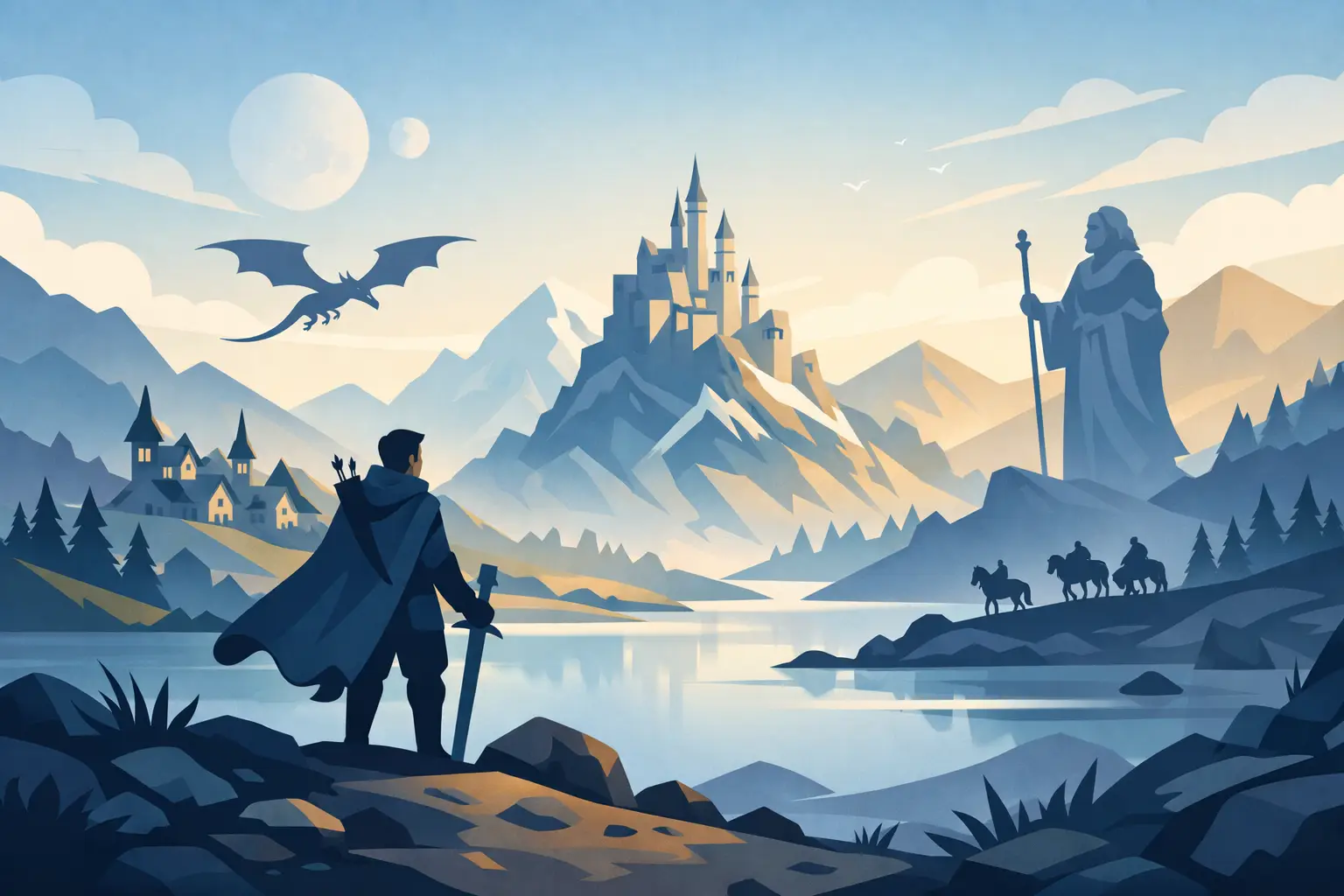
A farm boy sees a distant tower burning. A princess rides into exile with a kingdom on her back. A weary hero takes one more step because turning back would leave the innocent defenseless. That feeling – the sense that one choice can shape the fate of a world – sits at the heart of the answer to what is epic fantasy.
Epic fantasy is a branch of fantasy built on grand stakes, immersive worlds, and a struggle that reaches far beyond one person’s private troubles. It usually unfolds in a secondary world, or in a version of reality transformed by powerful magic, ancient history, and forces larger than everyday life. The story may begin with one frightened hero, but it rarely stays small for long. Before long, the fate of nations, peoples, realms, or even the balance between light and darkness is on the line.
That scale is the first clue. In epic fantasy, the danger matters not only to the main character but to countless others. A single victory can save a kingdom. A single betrayal can plunge the world into ruin. Readers come to the genre for that widening horizon, for the feeling that every step on the road leads into something older, larger, and more meaningful.
What is epic fantasy really about?
At its core, epic fantasy is about more than size. Bigger battles and thicker books do not automatically make a story epic. The genre earns that label when the story combines scale with moral weight. Courage matters. Loyalty matters. Sacrifice matters. Characters are tested not only by monsters and magic, but by the question of who they will become when everything they love is at risk.
That is why the best epic fantasy stories feel both vast and personal. Yes, there may be armies, prophecies, ancient evils, lost artifacts, or legendary quests. But readers remember the trembling promise between friends, the burden a protector carries, the moment a reluctant hero chooses duty over fear. The world may be enormous, yet the emotional engine is deeply human.
This is one reason the genre has such lasting power. Epic fantasy offers wonder, but it also offers meaning. It speaks to readers who want adventure with a heartbeat – stories where protecting the vulnerable, standing against darkness, and holding onto hope still matter.
The defining traits of epic fantasy
Most epic fantasy stories share a family resemblance, even when they look very different on the surface. They tend to build a rich world with its own cultures, history, geography, belief systems, and conflicts. The setting is not just a backdrop. It feels lived in, scarred by wars, shaped by legends, and full of places still waiting beyond the map.
Magic usually plays a major role, though its form can vary. In some stories, magic is mysterious and ancient, like a force woven into the bones of the world. In others, it has clear rules and costs. Either way, it tends to matter at the level of the whole story, not just as a trick for solving scenes.
Epic fantasy also leans toward larger casts and longer arcs. You may follow a chosen one, a warrior, a thief, a queen, a scholar, or an unlikely traveler who never asked for any of this. Often, several storylines converge as the conflict expands. That structure helps create the feeling that the world is moving on many fronts at once.
Then there are the stakes. In a smaller fantasy story, the danger might be local or intimate. In epic fantasy, the consequences spread outward. Cities fall. Alliances fracture. Ancient powers wake. What happens to one village may soon threaten a continent.
What makes epic fantasy different from regular fantasy?
Fantasy is a huge umbrella. Epic fantasy is one of its most beloved forms, but it is not the only one. If all fantasy includes impossible elements, epic fantasy is the version that aims for grandeur.
A cozy fantasy might focus on found family, food, and a quiet magical life. An urban fantasy might place sorcery in a modern city. A dark fantasy might dwell on horror and corruption. A sword-and-sorcery tale might center on a bold hero surviving one dangerous adventure at a time. Epic fantasy, by contrast, usually stretches toward sweeping conflict and enduring consequence.
That said, the line is not always sharp. Some stories borrow from multiple corners of the genre. A fantasy novel can begin with a small, intimate problem and slowly reveal epic dimensions. Another may have a giant world but keep its focus tightly personal. Genre labels help readers find the stories they love, but they are tools, not prison walls.
Why readers love epic fantasy
Epic fantasy delivers a rare combination of escape and purpose. It opens doors into endless worlds, yet those worlds often sharpen real emotions rather than blur them. Fear, grief, love, honor, and hope all burn brighter when set against the edge of catastrophe.
For many readers, the attraction is simple: the genre makes room for wonder. There are forgotten kingdoms, living legends, magical creatures, hidden paths, and battles that thunder across the page like storms. Epic fantasy reminds us that life can feel larger than routine, that the impossible can still stir the soul.
But spectacle alone is not enough. Readers return because the genre often treats bravery as a choice ordinary people can make. Heroes are rarely fearless. They doubt, fail, grieve, and bleed. They keep going anyway. That has a deep pull, especially for readers who want stories about resilience, loyalty, and protecting the innocent when the cost is high.
This is also why series thrive in epic fantasy. A single adventure can be thrilling, but a continuing saga lets readers travel farther with characters they care about. Relationships deepen. Threats evolve. Victories carry scars. By the time the final pages arrive, the journey feels earned.
Common ingredients in epic fantasy
Certain elements appear again and again because they work so well in this kind of story. Quests are common because they give the plot momentum and a clear sense of direction. Ancient prophecies add tension because they raise the question of destiny versus free will. Kings, rebels, guardians, exiles, and dark lords all show up because they embody power struggles that feel primal and immediate.
Still, none of these are mandatory. A story does not need a chosen one to be epic fantasy. It does not need dragons, maps, or royal bloodlines either. Some modern epic fantasy strips away familiar furniture and builds something new. What matters is not whether every classic ingredient appears, but whether the story creates that sweeping sense of consequence, wonder, and emotional gravity.
That trade-off matters. The more expansive a world becomes, the more care it needs. Too much lore too fast can bury the heart of the story. Too little, and the world may feel thin. The strongest epic fantasy keeps the grand design and the human pulse in balance.
What is epic fantasy in practice?
In practice, epic fantasy is the story of a journey that grows beyond itself. A hero leaves home to solve one problem and discovers a darkness tied to the fate of realms. A band of allies begins as strangers and becomes the last shield against ruin. A kingdom’s wound turns out to be part of an older war that never truly ended.
The genre is cinematic by nature. It loves ruins with secrets in the stone, mountain passes where one stand can change history, and final confrontations where more than survival is at stake. Yet its most powerful scenes are often quiet ones – a promise by firelight, a hand extended after failure, a moment of mercy where vengeance would be easier.
That blend of scale and sincerity is what makes epic fantasy memorable. It offers thunder, but it also offers heart.
For readers who crave epic adventures, morally charged quests, and worlds where courage still matters, epic fantasy is not just a category on a shelf. It is a promise. It promises a legendary journey through danger and wonder, where every trial asks something of the soul. Tommy Lee Davis writes in that spirit, where spectacle serves emotion and every hard-won step forward carries meaning.
If you have ever wanted a story that lets you stand beside heroes at the edge of darkness and still believe the light is worth fighting for, you already understand epic fantasy better than any label can explain.